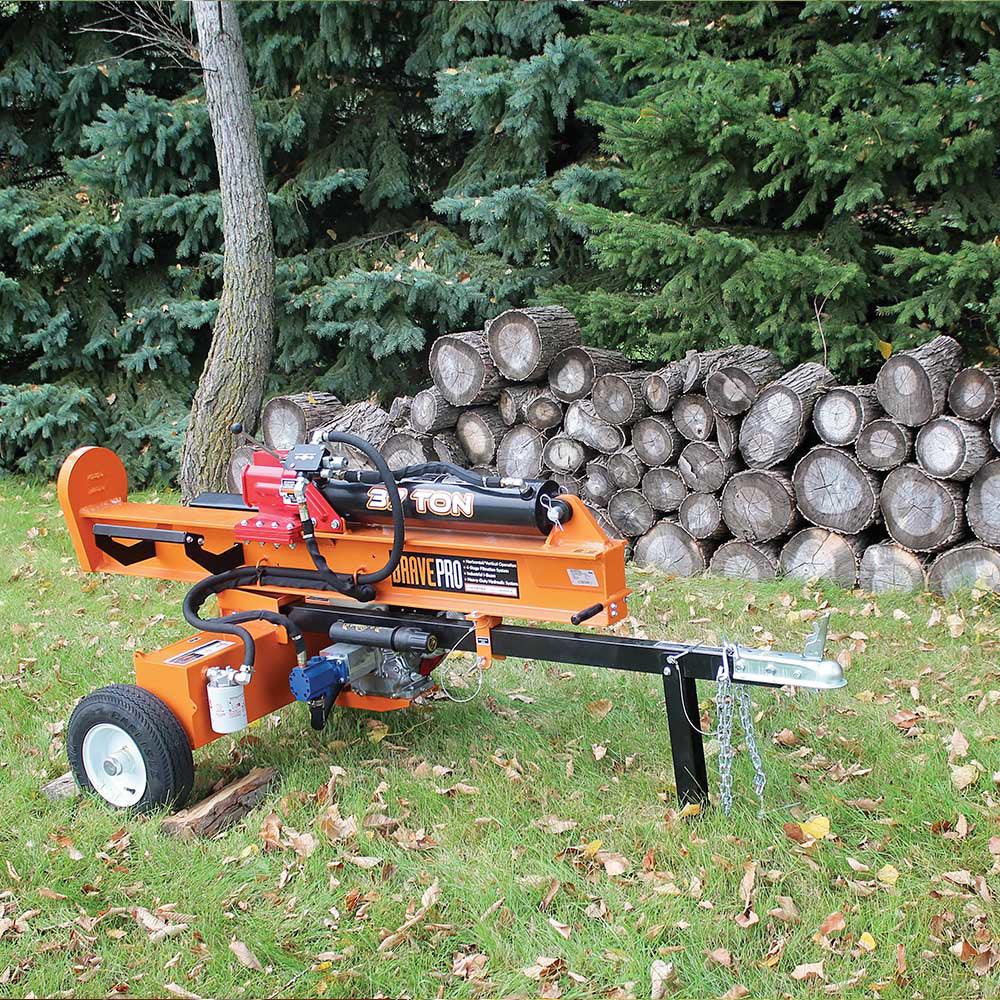
How does a gas log splitter work—and how can a relatively small engine separate a substantial round of wood? On a conventional hydraulic machine, the engine powers a system that turns rotating motion into a controlled, forceful push. Following that power path helps a first-time buyer understand what happens at the controls and decide whether this self-contained design suits the intended work site. This explanation covers the mechanism, rather than startup or operating procedures.
The power path from gasoline to a split log
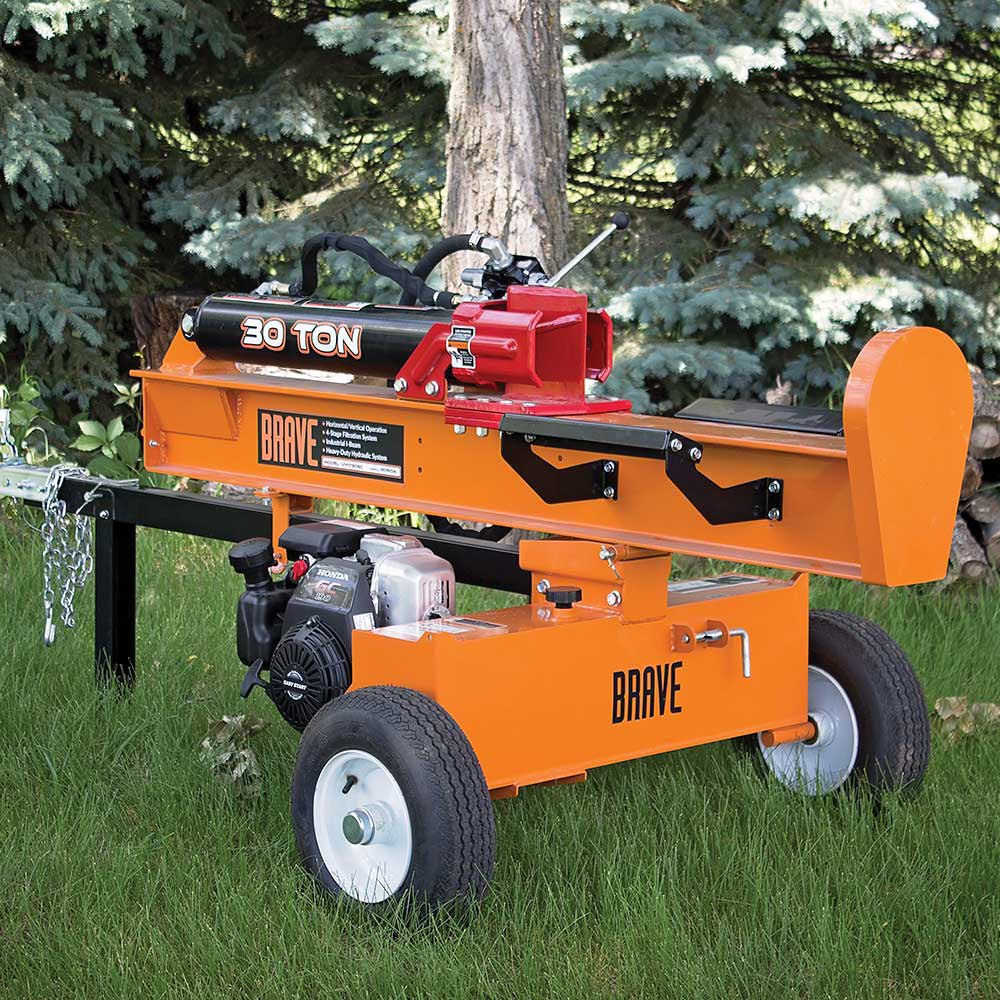 A conventional gas-powered hydraulic splitter follows this power path: engine → pump → hydraulic fluid routed by the control valve → cylinder → splitting wedge or pusher. The engine supplies rotation. The hydraulic system converts that input into straight-line movement at the splitting mechanism.
The important distinction is that the engine is not connected directly to the wedge like an engine driving a rotating saw blade. Instead, the pump moves fluid through hydraulic lines, and fluid pressure acts on a piston inside the cylinder.
- The engine supplies the mechanical power that drives the pump.
- The pump draws hydraulic fluid from the reservoir and supplies flow to the system.
- The control valve routes that flow to extend or retract the cylinder, or provides a neutral flow path.
- The cylinder converts hydraulic power into a push or pull.
- The wedge and opposing support apply that movement to the wood so it separates.
The reservoir completes the circulation path: fluid returning from the valve goes back to the tank for reuse. Gasoline supplies energy to the engine; hydraulic fluid carries power through the hydraulic circuit. They remain separate.
What the engine, pump, and reservoir each do
The engine supplies power; it does not determine splitting force by itself
The gasoline engine turns the pump through a mechanical drive connection. Its job is to supply the power needed to move hydraulic fluid while the system encounters resistance.
For a buyer, this means engine horsepower or displacement is only part of the picture. Splitting force also depends on the hydraulic system and cylinder. A larger engine specification alone does not tell you how much force reaches the wood or how quickly the ram will move.
The pump supplies flow, while resistance creates a demand for pressure
The pump draws fluid from the reservoir and sends it toward the control valve. When the valve directs fluid into the cylinder, the incoming fluid displaces the piston and moves the attached rod.
Flow and pressure describe different things. Flow describes how much fluid moves through the system over time. Pressure describes the force applied per unit area. The pump supplies flow; pressure builds as that flow encounters resistance, including the load at the cylinder. Pressure acting over the piston area produces force.1
Pump configurations vary. Some systems use two-stage pumps, while others achieve different movement characteristics through their valve arrangement. Do not assume every gas splitter has the same pump design, hydraulic flow, or pressure rating.
The reservoir holds circulating hydraulic fluid
The hydraulic reservoir is the tank that supplies fluid to the pump and receives returning fluid. It is separate from the engine's fuel tank and engine lubrication system.
The fluid circulates rather than being burned during each split. The machine's manual specifies the approved hydraulic fluid, filling requirements, and service procedures. Hydraulic fluid and engine oil serve different systems; never assume they are interchangeable.
When browsing gas log splitters, read the engine and hydraulic descriptions together. Those specifications explain how each model supplies power and transfers it to the splitting mechanism.
How the control valve moves and returns the ram
 The control valve determines where hydraulic fluid goes. In a representative system with a double-acting cylinder, it sends pump flow to one side of the piston while allowing fluid on the other side to return to the reservoir. Reversing those connections reverses cylinder movement.
The table below describes a conventional arrangement using a tandem-center valve, such as the layout documented for Prince's LS3000 log splitter valve. It illustrates the mechanism; it does not establish the control behavior of every splitter.2
| Hydraulic state | Fluid path | Result at the cylinder |
|---|---|---|
| Extension | Pump flow enters the cylinder's base end; fluid leaves the rod end. | The piston rod moves outward. |
| Retraction | Pump flow enters the rod end; fluid leaves the base end. | The piston rod moves inward. |
| Neutral | The cylinder ports are blocked, while pump flow passes back to the reservoir. | The valve stops commanding extension or retraction. |
Neutral does not mean the engine has stopped
In this arrangement, the engine can keep turning the pump while fluid circulates through the neutral passage. The splitter therefore does not need to shut down and restart its engine between individual splits.
Neutral is a control state, not a shutdown or servicing procedure. Follow the manufacturer's instructions whenever stopping work, clearing an obstruction, or servicing the machine.
Return controls vary by model
Some valves have a return detent: a feature that holds the valve in the retract position and releases under a specified pressure condition. Prince documents pressure-release detent options for its log splitter valves.3
For shopping purposes, check whether the model requires a held control during return or provides a detented return. Do not assume identical lever directions, automatic-return behavior, or control requirements across machines. These details affect what the operator does between splits, even when the underlying hydraulic principle is the same.
Why pressure and the wedge split the wood
The cylinder turns pressure into a straight-line push
Hydraulic pressure acts over the piston surface inside the cylinder. In a simplified explanation, pressure multiplied by the effective piston area gives force; actual output also reflects opposing pressure and mechanical losses.1 The rod transfers that force to the splitter's moving component.
This explains why an engine specification and a splitting-force rating describe different aspects of the machine. The engine supplies power, while the hydraulic pressure and cylinder geometry determine how that power becomes a push.
The system also has limits. A pressure-relief valve provides a path for fluid when its set pressure is reached.3 Resistance does not make the machine generate unlimited force, and a rated splitter cannot be assumed to separate every piece of wood.
The wedge opens the wood rather than cutting it like a saw
The wedge's leading edge starts an opening, and its widening faces force the wood apart as the mechanism advances. Straight grain may separate readily; knots and irregular grain can make the wedge's path more resistant.
Not every hydraulic splitter moves the wedge. In one arrangement, the cylinder drives a moving wedge into wood held against an opposing plate. In another, a moving pusher drives the wood against a fixed wedge. Both use cylinder force to bring the wood and wedge together.
When reviewing a product, identify which part moves and check its maximum log length, diameter, and permitted operating orientation. Understanding the power path does not establish whether a particular model has enough capacity or force for your wood.
Movement can change when more force is needed
A ram need not travel at one constant speed throughout a split. Some hydraulic systems provide a faster movement mode and a different mode for greater splitting force. For example, Prince documents a rapid-extend valve that lets a system using a single-stage pump shift from high-speed movement to high-force movement.3
The buying implication is straightforward: unloaded travel speed does not fully describe movement through resistant wood. Check the manufacturer's pump and valve descriptions, and how it defines the stated cycle time. A change in movement during a demanding split can be part of the design; it should not automatically be interpreted as an engine problem.
What hydraulic operation means for your work site
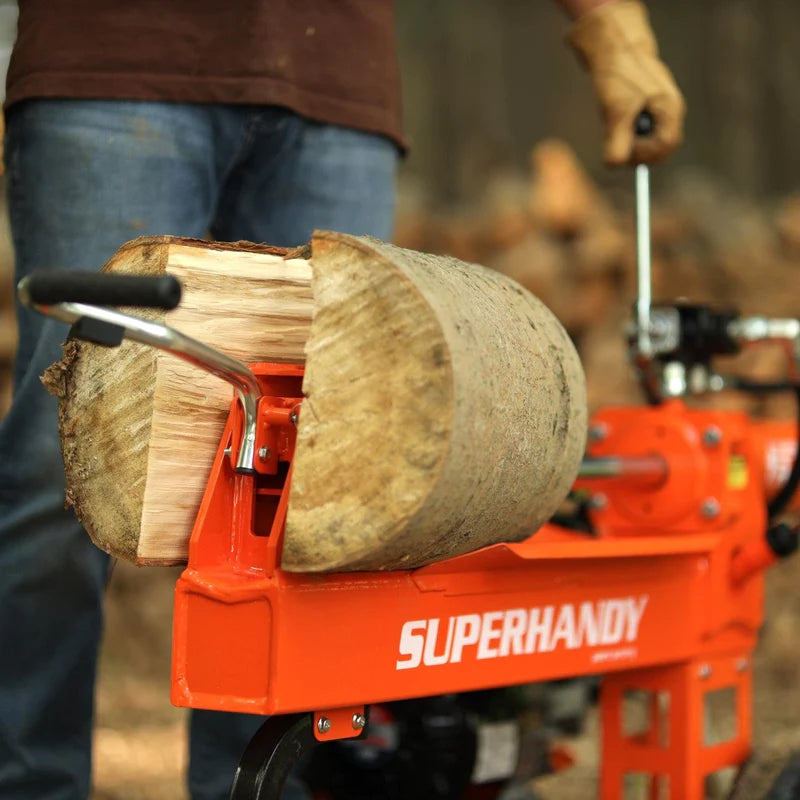 A standalone gas hydraulic splitter carries its own engine, pump, reservoir, and cylinder. It can supply splitting power without an electrical outlet or a tractor's hydraulic system. That makes its operating principle relevant for a woodpile or outdoor work area away from electrical service.
Outlet independence does not establish transport capability. Whether a machine can be moved easily, towed, or used on public roads depends on that model's specifications.
Self-contained power brings fuel, exhaust, and upkeep
The engine needs gasoline, produces exhaust and sound, and adds engine-related upkeep alongside hydraulic maintenance. Consider whether those requirements suit the place where you expect to split wood.
Use the manufacturer's site and exhaust-clearance requirements when choosing a location. A gasoline-powered splitter should not be treated as equipment for an enclosed indoor work area.
If your intended work area is near suitable electrical power and engine exhaust is a major concern, electric log splitters are another power-source category to inspect. Their capacities and operating requirements still need to match the work.
Gas power does not always mean a hydraulic splitting mechanism
Gasoline describes the power source, not necessarily the splitting mechanism. Some kinetic log splitters use an engine to store energy in rotating flywheels, then release it into the splitting stroke. They do not follow the conventional hydraulic power path explained here.
Before comparing individual gas models, confirm these characteristics:
- Mechanism: Is the splitting stroke hydraulic or kinetic?
- Power source: Does the machine have its own gasoline engine?
- Splitting arrangement: Does the wedge move, or does a pusher move the wood?
- Operating configuration: What orientation and return-control behavior does the manufacturer specify?
- Capacity: What log dimensions and splitting-force rating apply to that model?
A self-contained hydraulic gas splitter suits a buyer who wants controlled cylinder-driven splitting away from an outlet and can accommodate the engine's operating requirements. The next decision is whether a particular machine's configuration and capacity fit the wood and work site.
Conclusion
A conventional gas log splitter works by using an engine to drive a pump, a valve to route hydraulic fluid, and a cylinder to move a wedge or pusher against the wood. That relationship explains both its controlled splitting movement and its independence from an electrical outlet.
If that operating principle fits your location and expectations, review the Gas Log Splitters collection and confirm each model's mechanism, controls, operating orientation, and log-capacity specifications.
Sources Cited
- 1. OpenStax, College Physics 2e, Section 11.5, “Pascal's Principle.” Hydraulic pressure and force principles.
- 2. Prince Manufacturing Corporation, “Model LS3000 Logsplitter Valve,” including tandem-center neutral flow. LS3000 valve documentation.
- 3. Prince Manufacturing Corporation, log splitter valve catalog, models LS3000 and LSR-3060, including cylinder connections, detent options, relief valves, and rapid-extend operation. Log splitter valve catalog.