Types of Sprayers: Broadcast, Spot, Backpack & More
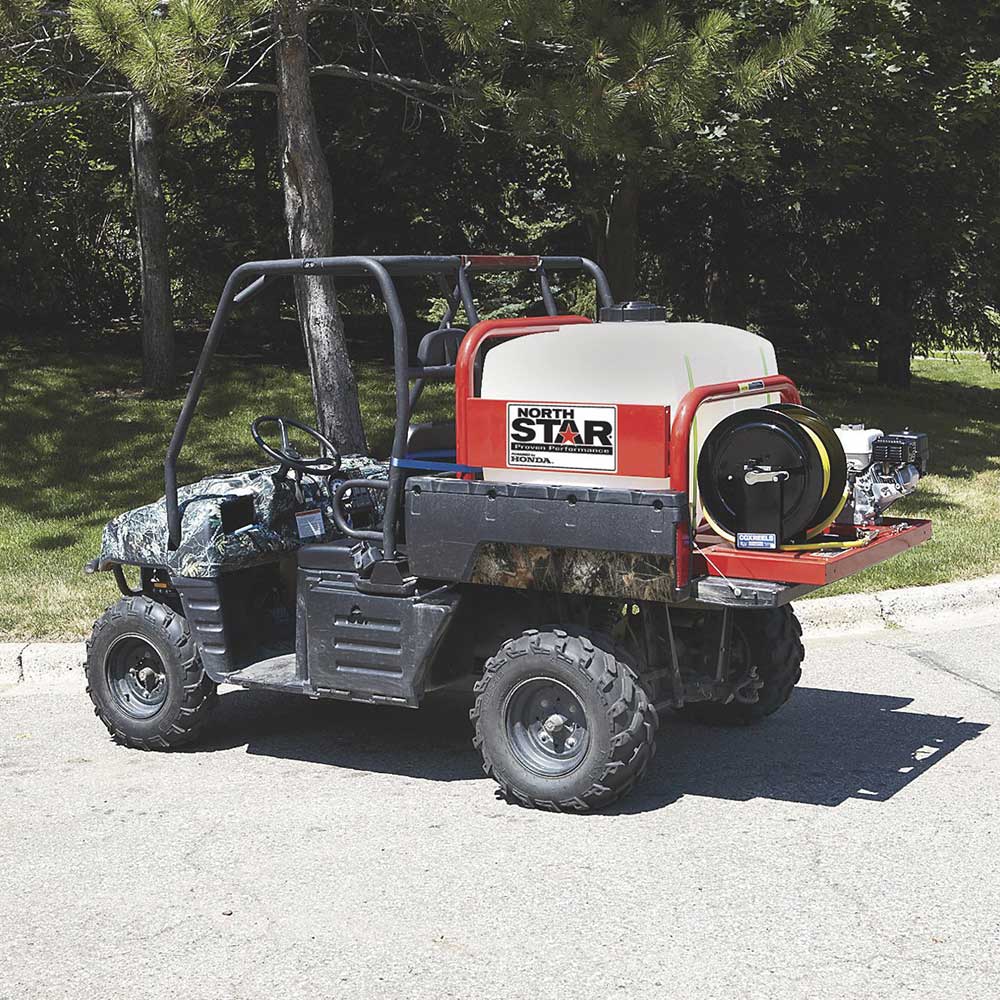
Sprayers apply compatible liquids through a nozzle or spray outlet for lawn, garden, and property maintenance. Broadcast and spot describe how liquid is applied, while backpack, utility, cart, and trailer describe how the equipment is carried or transported. A single sprayer can fit more than one category.
Broadcast Sprayers for Wide-Area Coverage
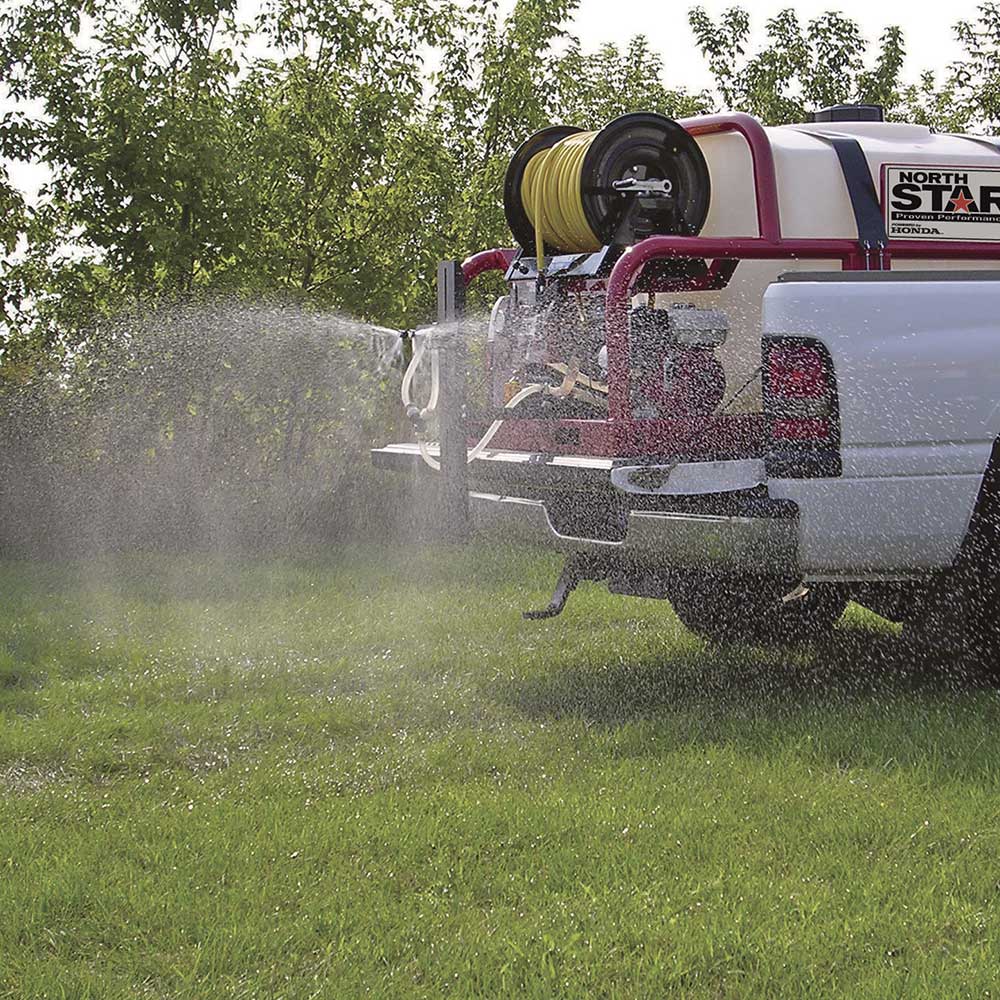
Broadcast sprayers distribute liquid across a swath, making them useful for treating open areas in successive passes. Their suitability depends on the application hardware, required application rate, terrain, and ability to maintain consistent travel speed.
Spot Sprayers for Targeted Applications
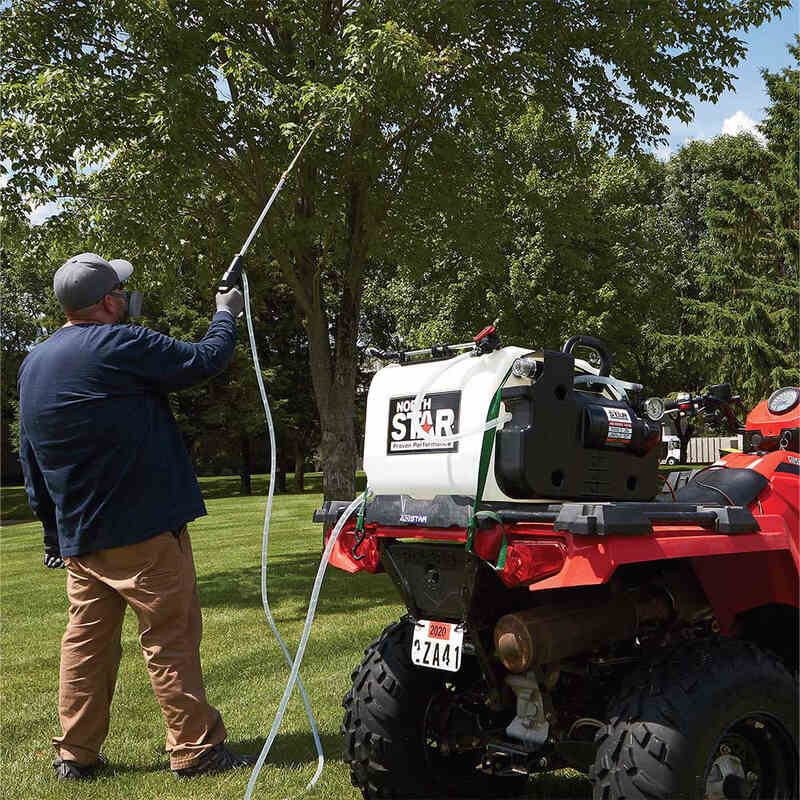
Spot sprayers direct liquid toward individual targets rather than treating an entire area. They are useful for isolated weeds, fence lines, and other locations where a hand-directed application is appropriate and permitted by the treatment label.
Backpack Sprayers for Portable Access
Backpack sprayers carry the tank on the operator's back, allowing access through gates, between planting beds, and around obstacles. Consider the filled weight, carrying comfort, and amount of walking involved rather than choosing by tank capacity alone.
Utility Sprayers for Vehicle-Mounted Use
Utility sprayers provide a tank-and-pump setup for use with a suitable vehicle or mounting platform, subject to the model's requirements. Check mounting dimensions, securement instructions, loaded weight, and power requirements before pairing a sprayer with existing equipment.
Cart and Trailer Sprayers for Wheeled Transport
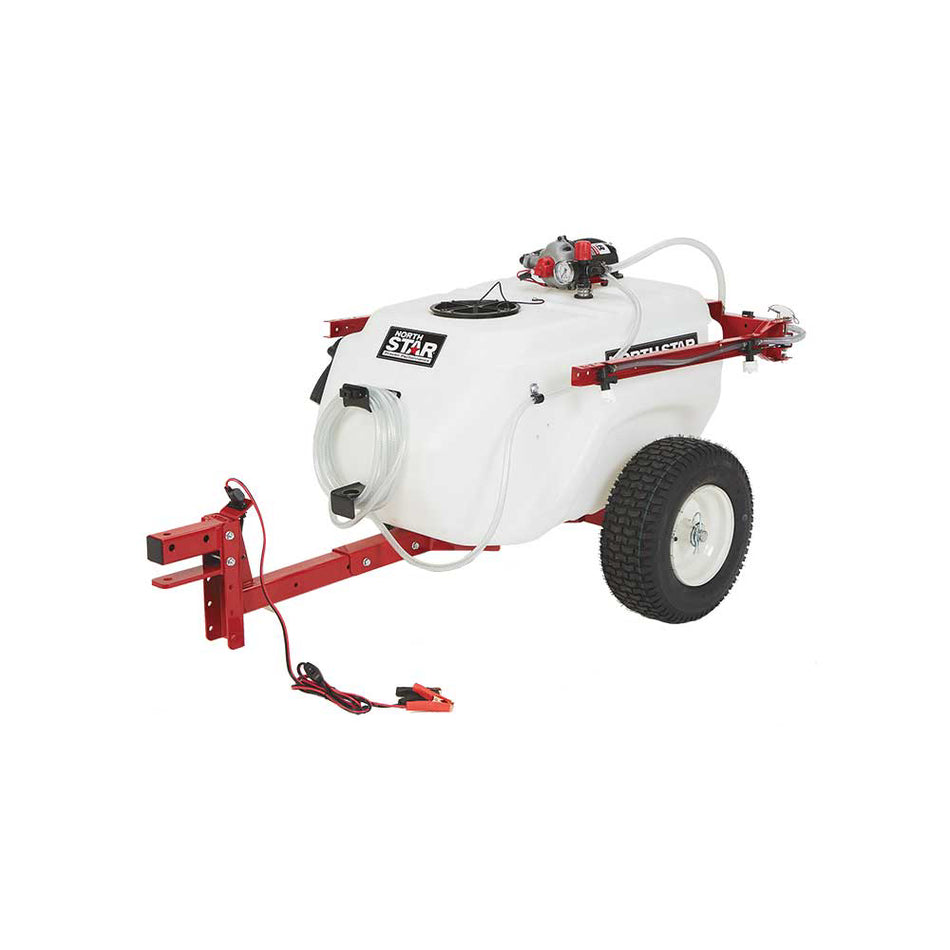
Cart sprayers move the tank on wheels and are generally pushed or pulled by the operator. Trailer sprayers are designed for towing with compatible equipment. Compare terrain access, turning space, towing limits, and storage needs when deciding between them.
Broadcast Sprayers vs. Spot Sprayers
The main difference between broadcast and spot spraying is whether you need to treat an area continuously or direct liquid at selected targets. Choosing the appropriate application method helps match the equipment to the job.
Wide-Area Coverage vs. Targeted Application
Broadcast spraying suits applications that call for coverage across an entire treatment area. Spot spraying provides operator-directed placement where only particular plants or locations need treatment. Neither method is automatically appropriate for every product or site.
Open Lawns vs. Fence Lines and Isolated Weeds
Open ground provides room for consistent broadcast passes. Obstacles, boundaries, and scattered treatment targets can make spot application more practical. Consider nearby desirable plants and the treatment label's application restrictions when choosing your approach.
Liquid application also differs from distributing dry material. If your lawn-care product is granular rather than a sprayable formulation, compare compatible spreaders instead of assuming it belongs in a sprayer tank.
Combined Broadcast and Spot Spraying
A sprayer equipped for both methods can cover open areas and handle individual targets with the same tank system. Confirm that the particular model includes both application setups; the words “utility sprayer” or “trailer sprayer” alone do not establish those capabilities.
How to Choose the Right Sprayer
Start with what you need to apply, where you need to work, and how the equipment will reach that area. Those requirements narrow the choice more effectively than selecting the largest tank or highest pressure rating.
Match the Sprayer to Your Treatment and Application
Check that the treatment label permits the intended use and that the sprayer manufacturer approves the formulation for its tank, pump, seals, and hoses. A sprayer suitable for one liquid is not automatically suitable for every lawn or garden treatment.
Compare Backpack, Cart, Utility, and Trailer Setups
Backpack sprayers favor access on foot, while carts move tank weight onto wheels. Utility sprayers depend on a suitable mounting platform, and trailer sprayers require compatible towing equipment. Choose the configuration that fits your working route and physical handling requirements.
Account for Property Size, Terrain, and Access
Evaluate the area you actually intend to treat, including gates, slopes, soft ground, and obstacles. A large property with scattered treatment targets may need a different setup from a smaller property receiving full-area applications.
Spraying and vegetation removal also solve different problems. Where the task is physically cutting dense growth rather than applying a treatment, compare appropriate brush cutters before choosing equipment.
Check Vehicle, Hitch, and Power Compatibility
For mounted and towable sprayers, verify the manufacturer's requirements against the host equipment's ratings. Check the mounting arrangement or hitch, loaded weight, electrical connection where applicable, and operating limitations.
If you plan to tow with equipment from the lawn mower collection, confirm that the specific mower permits towing and can handle the proposed load. A hitch connection alone does not establish compatibility.
Choosing Sprayer Tank Capacity & Coverage
Tank capacity determines how much liquid a sprayer carries, but it does not establish a fixed coverage area. The appropriate size balances application rate, refill access, handling, and equipment load limits.
Balance Tank Size, Loaded Weight, and Refill Frequency
A larger tank can reduce refill stops, but it increases the weight that must be carried, pushed, mounted, or towed. Water weighs approximately 8.34 pounds per US gallon before adding the sprayer's own weight; mixed solutions may weigh differently.
Choose a capacity that supports a manageable working interval without exceeding operator or equipment limits. More capacity offers little benefit if the filled sprayer cannot safely reach the treatment area.
Estimate Coverage Using the Required Application Rate
For a calibrated broadcast application, estimated coverage equals usable tank volume divided by spray-solution application rate. For example, 20 gallons applied at 10 gallons per acre would cover approximately 2 acres. This is a calculation example, not a recommended treatment rate or a product coverage claim.
Use the label and calibration procedure to establish the correct rate. Distinguish total mixed spray volume from the amount of concentrated treatment added to the tank.
Check Carrying, Mounting, and Towing Limits
Calculate the combined weight of the sprayer, liquid, and any attached equipment. Compare that total with the relevant platform, rack, vehicle, or towing ratings, following the manufacturer's instructions.
For trailer sprayers, also check maximum towing speed and terrain restrictions. A towable configuration does not automatically mean the equipment is suitable for public-road travel.
Sprayer Pumps, Pressure & Flow Rate Explained
Pump specifications help determine whether a sprayer can support its intended application hardware. Evaluate flow and pressure together rather than treating either maximum rating as a complete measure of performance.
Compare Pump Drive and Power Requirements
Identify how the specific sprayer's pump is powered and what that requires during use. Check the listed connection, operating instructions, and any separate power equipment or components needed before purchase.
Do not infer the power source from tank size or sprayer category. Similar-looking sprayers can have different operating requirements.
Understand Pump Flow Rate and Operating Pressure
Flow rate describes the volume of liquid delivered over time, commonly in gallons per minute. Pressure describes the force within the system, commonly in pounds per square inch. Published maximum flow and maximum pressure may represent different operating conditions.
Higher pressure is not automatically better. The appropriate operating pressure depends on the nozzle, desired application, treatment requirements, and equipment limits.
Match Pump Performance to the Application Hardware
The pump must supply the required flow at the intended operating pressure for the installed outlets. Adding outlets or changing nozzles can alter demand, so verify compatibility rather than assuming a larger application setup will work.
Lawn and garden sprayers should also be selected separately from pressure washers, which serve cleaning applications. Pressure ratings alone do not make the two equipment categories interchangeable.
Sprayer Features, Nozzles & Accessory Options
Application hardware and handling details affect how well a sprayer fits your work. Use the individual product listing to establish what is included, and verify any proposed accessory or configuration change with the manufacturer.
Choose Spot, Broadcast, or Combined Application Equipment
Confirm whether the model provides hand-directed spraying, broadcast coverage, or both. For broadcast equipment, check the specified application arrangement and working width rather than assuming every sprayer uses the same layout.
Compare Nozzle Requirements and Hose Reach
Nozzle selection affects flow, spray pattern, and application performance. Use only a compatible nozzle that meets the treatment label's requirements and operates within the sprayer's specifications.
Where a hose is included, compare its stated length with the distance between the tank and treatment targets. Maximum advertised spray distance is not the same as hose reach or a guaranteed effective treatment distance.
Check Listed Controls and Filtration
Review the model's specifications for its controls and any listed filtration components. Understand how the operator starts, stops, and manages application, and what inspection or cleaning the manufacturer requires.
Evaluate Filling, Draining, and Cleanout Access
Consider how you will fill the tank and clean the system between approved uses. Review the manufacturer's procedures and the treatment label before purchase, particularly if you expect to switch between different treatments.
Verify Included Equipment and Compatible Accessories
Separate standard equipment from optional items when comparing prices. Check whether the advertised configuration supplies everything required for your intended application, and confirm accessory compatibility by model rather than tank size or brand alone.
Sprayer Prices: What Affects Cost & Value?
Sprayer value depends on the complete working setup and how well it fits your applications. Compare equipment with similar capabilities before deciding whether a higher purchase price delivers a useful benefit.
Compare Cost by Sprayer Type and Capacity
Tank size, transport configuration, and application capability all affect the equipment being purchased. A backpack sprayer and a trailer sprayer address different handling needs, so the lowest price across the collection is not necessarily the lowest-cost solution for your job.
Understand Pump and Application Equipment Costs
Compare pump specifications and included application hardware alongside tank volume. Two sprayers with similar capacities can differ substantially in the work they support and the components supplied.
Account for Required Extras and Existing Equipment
Include any required mounting components, compatible accessories, or power equipment in the total purchase calculation. A sprayer that works with equipment you already own may offer value, provided all compatibility requirements are satisfied.
Also choose the correct equipment category for the material you intend to apply. Dry lawn treatments generally call for compatible broadcast or other granular spreaders, while sprayers handle approved liquid applications.
Consider Construction, Replacement Parts, and Serviceability
Review documented construction details, warranty terms, maintenance requirements, and replacement-component availability for each model. Accessible service information and obtainable parts can matter as much as initial capacity when evaluating long-term ownership.


 -14%

 -4%

 -10%

 -20%
 -8%

 -11%

 -10%

 -13%

 -23%

 -5%
 -8%

 -6%

 -10%

 -17%

 -12%

 -9%

 -12%
 -10%

 -6%

 -4%
 -5%
 -23%

 -19%

 -13%
 -9%

 -9%


