What Is a Skid Steer Log Splitter?
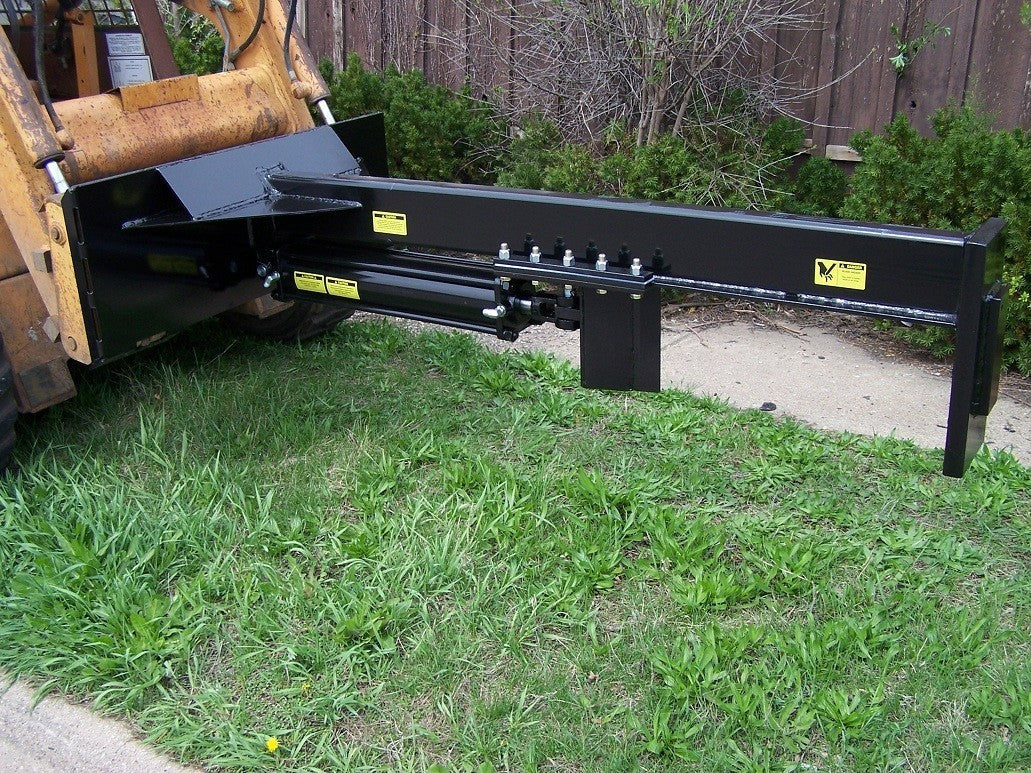
A skid steer log splitter is a hydraulically powered attachment used to split logs into smaller pieces for firewood, handling, drying, or storage. Instead of relying on its own engine or motor, the attachment operates through the auxiliary hydraulic system of a compatible skid steer or other manufacturer-approved host machine.
How Does a Skid Steer Log Splitter Work?
Most models use hydraulic pressure to move a cylinder that drives a wedge through the log or pushes the wood against a wedge. The skid steer supplies the hydraulic power, while the attachment provides the beam, cylinder, wedge, mounting structure, and other splitting components.
The exact operating sequence depends on the attachment. Follow the manufacturer’s instructions for connecting the hydraulics, positioning logs, controlling the splitting stroke, and safely disconnecting the equipment.
Who Uses Skid Steer Log Splitters?
These attachments are relevant to skid steer owners processing firewood on farms, ranches, acreages, wooded properties, tree-service sites, and commercial work areas. They can be especially useful when the operator needs to work with large or difficult rounds while using equipment already available on the property or job site.
What Equipment Powers the Splitter?
The host machine provides hydraulic flow and pressure through its auxiliary hydraulic circuit. Compatibility is model-specific, so owning a skid steer does not automatically mean that every splitter attachment will fit or operate correctly.
How Is an Attachment Different From a Standalone Splitter?
A standalone splitter has its own power source, such as a gasoline engine or electric motor. A skid steer attachment depends on a compatible host machine, but it can integrate splitting with the skid steer’s mobility and material-handling capabilities. Buyers who do not own suitable equipment may be better served by self-contained gas log splitters or electric log splitters.
Why Use a Skid Steer Log Splitter?
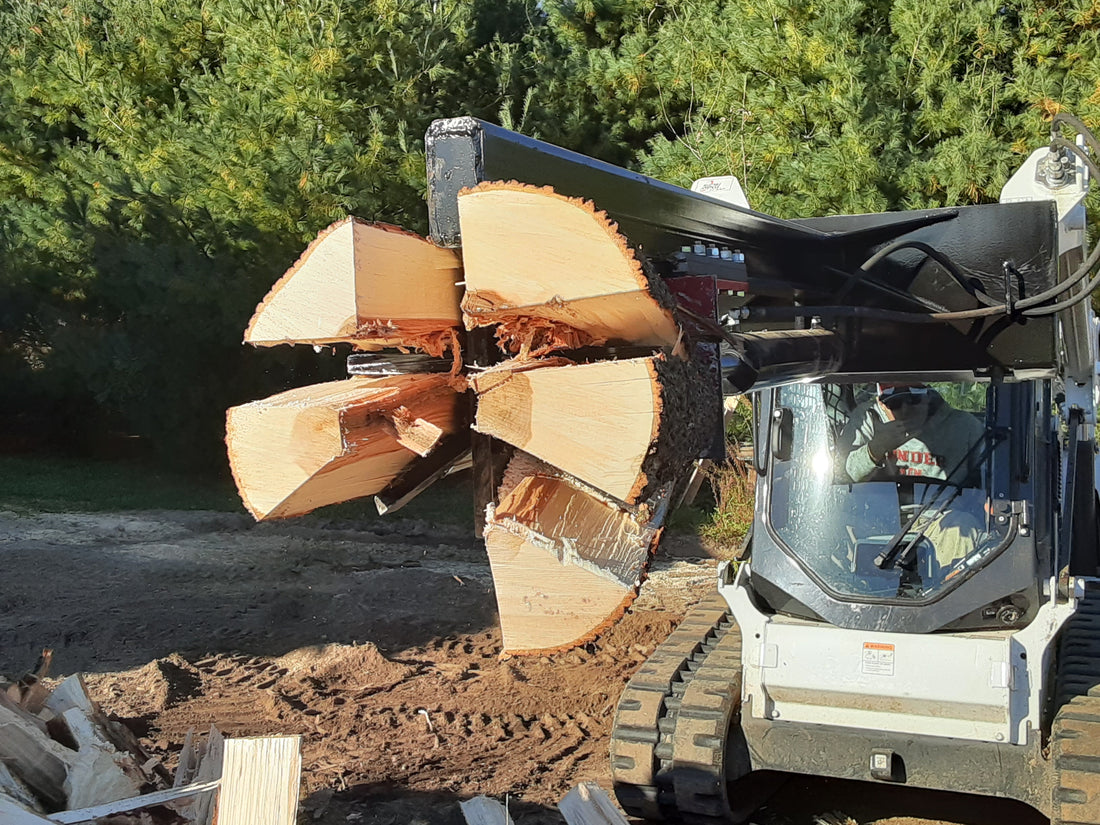
The main advantage of a skid steer log splitter is its ability to combine hydraulic splitting with the mobility and positioning capabilities of a compatible skid steer. The practical value depends on the attachment’s configuration, the host machine, the logs being processed, and the operator’s workflow.
Reduce Manual Handling of Heavy Rounds
Certain attachment configurations allow the operator to approach and position logs without first lifting every round onto a low standalone splitter. This can reduce repeated manual handling when working with large, heavy, or irregular wood.
The amount of handling required varies by attachment design. Review product specifications and operating instructions rather than assuming every skid steer splitter can pick up or reposition logs in the same way.
Use Equipment You Already Own
A compatible skid steer supplies the splitter’s hydraulic power, eliminating the need for a separate engine or electric motor on the attachment. This can make sense for farms, acreage owners, contractors, and tree-service operators who already use a skid steer during wood cleanup or property maintenance.
Move Between Logs and Work Areas
A skid steer can carry the attachment around a property or job site instead of requiring every log to be transported to a stationary splitting location. That mobility may improve workflow when rounds are distributed across a clearing, woodlot, storm-cleanup area, or large property.
Support Higher-Volume Workflows
For users processing substantial quantities of wood, productivity depends on more than splitting force. Hydraulic performance, cycle time, wedge design, log positioning, and the amount of manual handling all influence how much wood can be processed efficiently.
Integrate Splitting With Other Skid Steer Work
Operators may use different skid steer attachments for material handling, property maintenance, and site cleanup. Depending on the job, a splitter can be part of a broader workflow that also uses buckets, forks, or grapples to move logs and finished firewood.
How to Choose a Skid Steer Log Splitter
The right attachment must match both the wood being split and the skid steer powering it. Evaluate splitting demands, expected production, hydraulic requirements, attachment interface, and operating configuration before comparing price alone.
Match Splitting Force to the Wood
Rated splitting force is commonly expressed in tons, but higher tonnage is not automatically better for every user. Larger-diameter, hard, green, knotty, or twisted-grain logs generally place greater demands on a splitter than smaller, straight-grained, seasoned rounds.
Consider the most difficult wood you regularly encounter rather than choosing solely around an average log. No tonnage rating should be treated as a guarantee that the attachment will split every round.
Verify Hydraulic Flow and Pressure
Compare the attachment’s required hydraulic flow and pressure with the specifications of your skid steer. An incorrect match may lead to poor performance, excessive heat, equipment damage, or unsafe operation.
Confirm whether the attachment is designed for standard-flow or high-flow hydraulics. Never assume that more available flow is acceptable unless it falls within the manufacturer’s stated operating range.
Confirm the Mounting Interface and Couplers
Verify the attachment plate, hose connections, hydraulic couplers, and any required adapters. Even when the mounting interface appears compatible, the hydraulic requirements and connections must also match.
Compare Log Capacity and Operating Configuration
Check the rated maximum log length, opening, and any diameter guidance supplied for each model. Also consider how the attachment holds, approaches, or positions the log, especially if reducing manual lifting is a major reason for choosing a skid steer splitter.
Evaluate Cycle Time and Workload
A shorter cycle time can improve output, but it should be considered alongside splitting force, hydraulic performance, wedge configuration, and log-handling time. Occasional property cleanup and continuous firewood production place different demands on an attachment.
Check Host-Machine Capacity
Confirm that the skid steer can safely carry and operate the attachment within the machine manufacturer’s limits. Attachment weight, operating capacity, hydraulic specifications, stability, and visibility should all be evaluated before use.
Skid Steer Log Splitter Types and Configurations
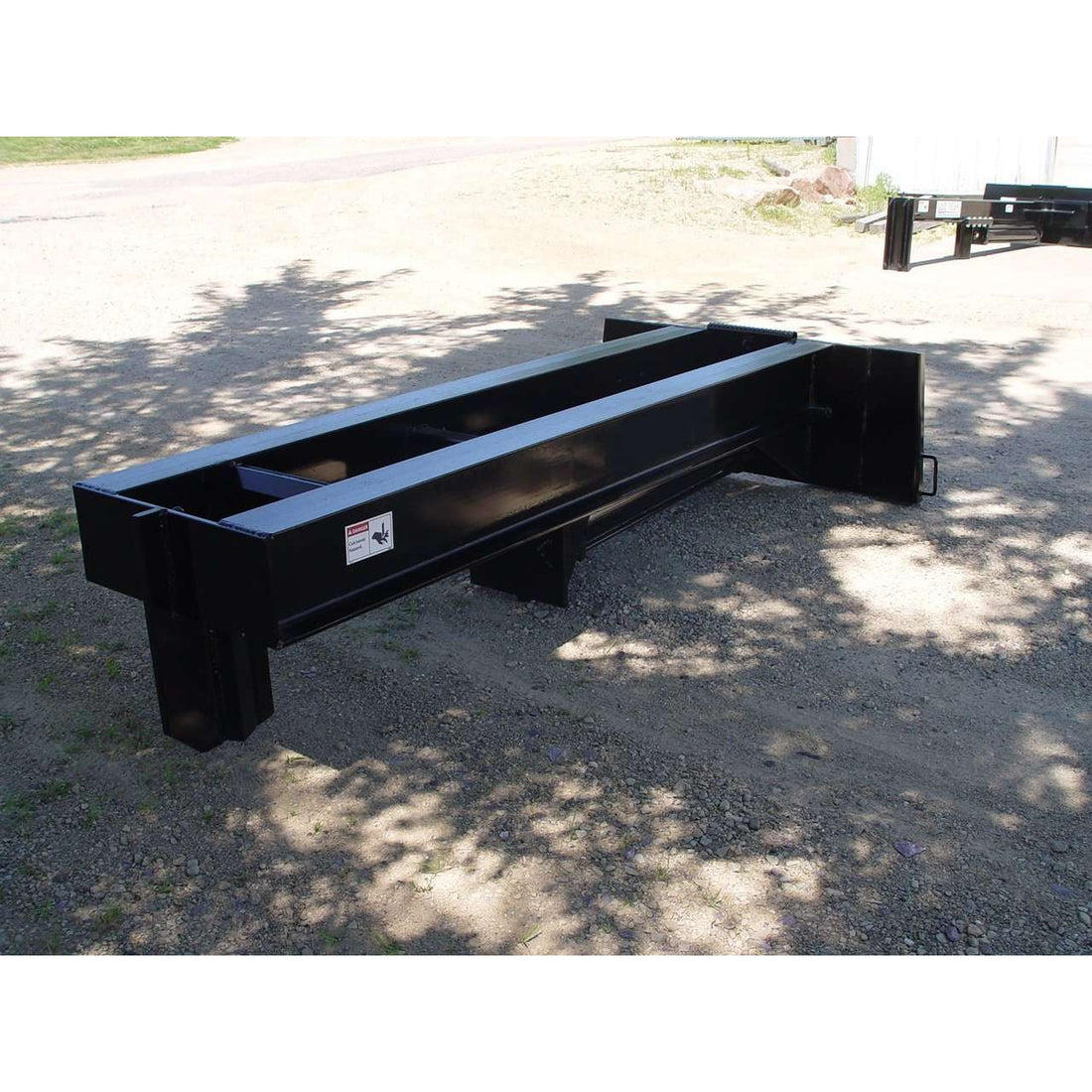
Skid steer splitters are available in different operating orientations and attachment designs. The most suitable configuration depends on log size, ground conditions, required handling, visibility, and whether the operator prioritizes simplicity or reduced manual contact with the wood.
Upside-Down or Inverted Splitters
An upside-down or inverted splitter positions the splitting mechanism beneath the attachment so the operator can approach logs from above. Depending on the model, this arrangement may allow logs to be positioned and split near ground level while the operator remains in the cab.
This configuration can be useful for large rounds, but visibility, ground conditions, hydraulic compatibility, and the manufacturer’s operating procedure remain important.
Horizontal Splitting Configurations
Horizontal configurations generally support the log along a beam while the wedge or push plate completes the stroke. They can provide a controlled splitting surface, but the operator may need to load and reposition the wood manually depending on the attachment design.
Vertical Splitting Configurations
Vertical operation can help with rounds that are difficult to lift onto a horizontal beam because the wood may be positioned closer to ground level. Do not assume that every attachment supports both horizontal and vertical use; verify the operating orientations listed for the individual model.
Choosing a Configuration for Your Workflow
Consider where the logs will be located, how they will be positioned, and what happens to each piece after the split. A design that reduces lifting may suit large rounds, while another configuration may provide a more familiar workflow for uniform firewood.
Skid Steer vs. Tractor-Mounted Configurations
A skid steer splitter connects to compatible skid steer equipment, while 3-point tractor log splitters use a compatible tractor hitch and a model-specific hydraulic or PTO-powered arrangement. The better choice depends on the equipment already owned, hydraulic compatibility, mobility needs, and preferred operating position.
Features That Determine Splitting Performance
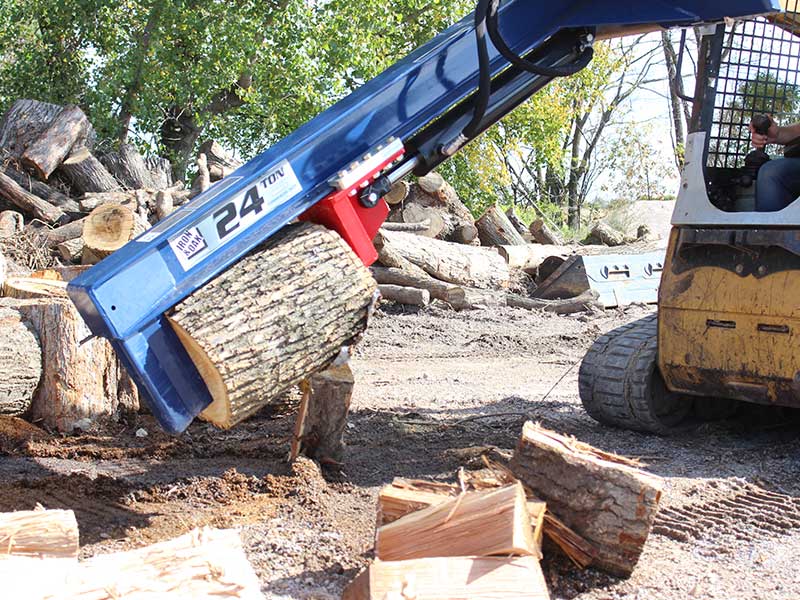
Splitting force is important, but it is only one part of attachment performance. Hydraulic matching, cycle time, wedge configuration, log capacity, construction, and serviceability collectively determine how well a splitter fits its intended work.
Rated Splitting Force
Tonnage describes the attachment’s rated splitting force. More force can help with difficult wood, but an appropriate rating depends on log diameter, species, moisture, knots, grain, length, and production volume.
Hydraulic System and Cycle Time
The host machine’s hydraulic flow and pressure affect how the attachment operates. Cycle time generally describes how long the splitting mechanism takes to complete an operating cycle, but a fast published time is useful only when the attachment is properly matched to the skid steer.
Wedge Design
Wedge shape and configuration affect how many pieces may be produced during a stroke and how the splitter responds to irregular wood. Available wedges vary by model, and some designs may be better suited to straight-grained rounds than heavily knotted logs.
Before adding or replacing a wedge, confirm that it is approved for that splitter. Browse compatible log splitter accessories where appropriate rather than assuming that wedges are interchangeable.
Stroke Length and Log Capacity
Stroke length and maximum opening help determine which log lengths the attachment can accept. Compare these specifications with the rounds you normally cut, and use model-specific capacity ratings instead of applying one limit to the entire category.
Construction and Serviceability
Compare the beam, cylinder, wedge assembly, hydraulic hoses, fittings, pivot points, and replaceable components shown in each product’s specifications. For frequent use, access to maintenance information, parts, and manufacturer support can be as important as the initial feature list.
Skid Steer Log Splitters vs. Other Options
A skid steer attachment is not automatically the best splitter for every buyer. The decision depends on existing equipment, hydraulic compatibility, log-handling needs, mobility, workload, maintenance preferences, and budget.
Skid Steer Log Splitter vs. Gas Log Splitter
A skid steer model uses the host machine’s hydraulic system, while a gas splitter carries its own engine and hydraulic system. Gas units can operate without a skid steer and may be easier to transport independently, while a skid steer attachment can fit more naturally into a workflow that already relies on heavy equipment.
Skid Steer Log Splitter vs. 3-Point Tractor Splitter
Both types use compatible equipment already owned by the buyer, but their connection and power requirements differ. Tractor models may use the tractor’s hydraulics, a PTO-powered system, or another model-specific arrangement; skid steer models rely on a compatible mounting interface and auxiliary hydraulics.
Attachment vs. Electric Log Splitter
Electric splitters eliminate gasoline and engine exhaust and can be convenient for smaller-scale residential use near suitable electrical power. Skid steer attachments are generally more relevant to buyers who already own compatible equipment and need to process wood around farms, acreages, forestry sites, or commercial properties.
When a Standalone Splitter Makes More Sense
Choose a self-contained machine when the splitter must operate without a skid steer, move independently between locations, or serve users who do not have a compatible host machine. Buyers seeking a particularly fast splitting action may also compare kinetic log splitters, which use stored rotational energy rather than hydraulic pressure for the splitting stroke.
When a Skid Steer Attachment Makes More Sense
A skid steer splitter can be a strong fit when compatible equipment is already central to the work and large logs must be approached across a broad property or job site. The decision is strongest when the attachment matches both the machine specifications and the operator’s complete wood-handling workflow.
Skid Steer Log Splitter Cost and Long-Term Value
Skid steer log splitter prices vary by splitting force, hydraulic components, operating configuration, log capacity, construction, included equipment, and manufacturer. Compare the complete application fit rather than treating the lowest price or highest tonnage as the only measure of value.
What Affects the Purchase Price?
Cost differences may reflect cylinder and hydraulic design, rated force, stroke or opening, wedge configuration, attachment construction, and other model-specific features. Shipping, delivery requirements, and availability can also vary, so review the individual product listing before ordering.
Match Investment to Workload
An occasional property-maintenance user may prioritize straightforward operation and an appropriate capacity. Farms, tree services, firewood sellers, and other frequent users may place greater value on cycle time, reduced log handling, serviceability, and consistent operation during larger jobs.
Consider Productivity, Not Tonnage Alone
A more powerful splitter does not necessarily produce more finished firewood if log positioning, cycle speed, or hydraulic mismatch slows the work. Evaluate how the attachment will function from the moment a round is approached until the split pieces are moved or stacked.
Account for Ownership Requirements
Long-term value can depend on hydraulic-hose inspection, wedge condition, lubrication points, replacement-part availability, storage, and access to manufacturer support. Follow the maintenance schedule and fluid recommendations for both the attachment and the host machine.
Verify Warranty and Delivery Details
Warranty coverage, shipping method, freight arrangements, assembly, and lead time can differ by product. Consult the individual listing and manufacturer documentation instead of assuming that all attachments receive identical coverage or delivery service.
Plan the Complete Firewood Workflow
Splitting is only one stage of firewood preparation. Depending on your operation, compatible cutting equipment and properly sized firewood racks may help create an organized process for cutting, splitting, drying, and storing wood.


 -5%

 -2%

 -7%

 -14%

 -13%

 -9%

 -8%

 -16%

 -3%

 -5%

 -7%

 -14%

 -2%

 -9%

 -9%


 -6%

 -14%

 -6%

 -13%


