What Are Rough-Cut Trail Cutters Designed to Cut?
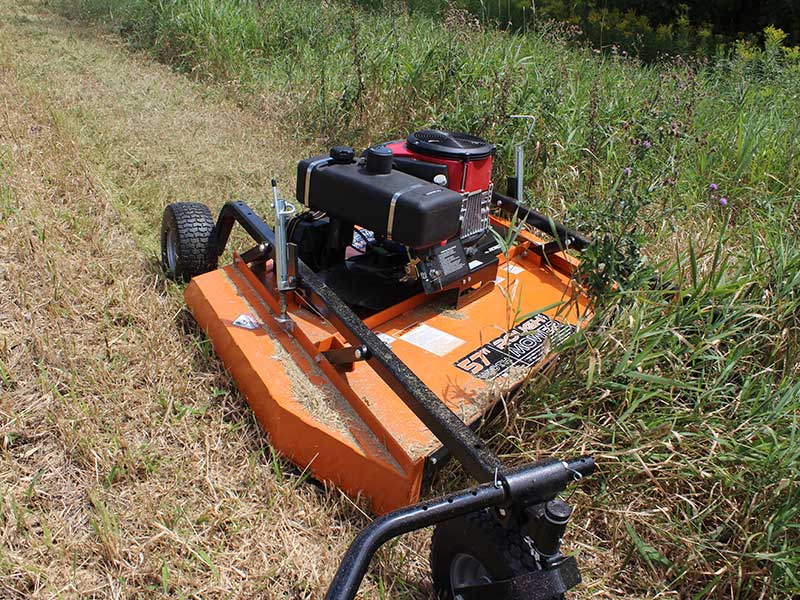
Rough-cut trail cutters are tow-behind cutting machines intended for vegetation that calls for a coarser cut than routine lawn mowing. Their suitability depends on the type of growth, ground conditions, and the individual cutter’s operating limits.
Tall Grass, Weeds, and Overgrown Vegetation
Trail cutters are useful for managing tall grass and weeds along established trails, field margins, and other accessible areas. Dense growth can require slower travel than lighter vegetation, even when both are within the machine’s capacity.
Brush Within the Model’s Rated Capacity
Check the manufacturer’s cutting specifications before choosing a cutter for woody vegetation. A stated maximum stem diameter is a model-specific limit, not a promise that every patch of brush can be cut at the same speed. Do not assume every rough-cut machine is suitable for saplings.
Trails, Fields, and Property Access Routes
Maintaining existing routes can make it easier to reach different parts of a property and keep vegetation from closing in. Inspect the route first: rocks, wire, stumps, and debris can make an otherwise accessible area unsuitable for cutting.
What Cutting Finish to Expect
Expect a utility cut rather than a manicured lawn finish. Rough-cut equipment prioritizes managing heavier vegetation; for maintained turf where appearance matters, compare finish-cut tow mowers.
Rough-Cut Trail Cutters vs. Other Mowing Equipment
The right equipment depends on the vegetation, available access, and finish you need. Comparing cutting methods helps distinguish trail maintenance from lawn care and work that requires a different brush-clearing machine.
Rough-Cut Trail Cutters vs. Finish-Cut Tow Mowers
A rough-cut trail cutter is intended for coarser vegetation management, while a finish-cut tow mower is intended for regularly maintained grass. Choose by the material being cut and the desired result, rather than assuming that similar deck widths make the machines interchangeable.
Tow-Behind Trail Cutters vs. Tractor Rotary Cutters
A tractor rotary cutter requires a compatible tractor and the specified mounting and power connections. A tow-behind trail cutter has its own model-specific towing and power arrangement. Compare the complete equipment requirements, especially if you already own a tractor or are planning to use an ATV or UTV.
Tow-Behind Trail Cutters vs. Walk-Behind Brush Mowers
A tow-behind cutter needs enough room for the towing vehicle, cutter, and turns. Walk-behind equipment may suit areas where that combination cannot maneuver. Compare brush cutters when access and close control are more important than covering open ground.
Trail Cutters vs. Lawn and Zero-Turn Mowers
Lawn mowers and zero-turn mowers are alternatives for maintained grass when their specifications match the site. Mowing speed and maneuverability on turf do not establish suitability for woody brush or neglected ground.
How to Choose the Right Rough-Cut Trail Cutter
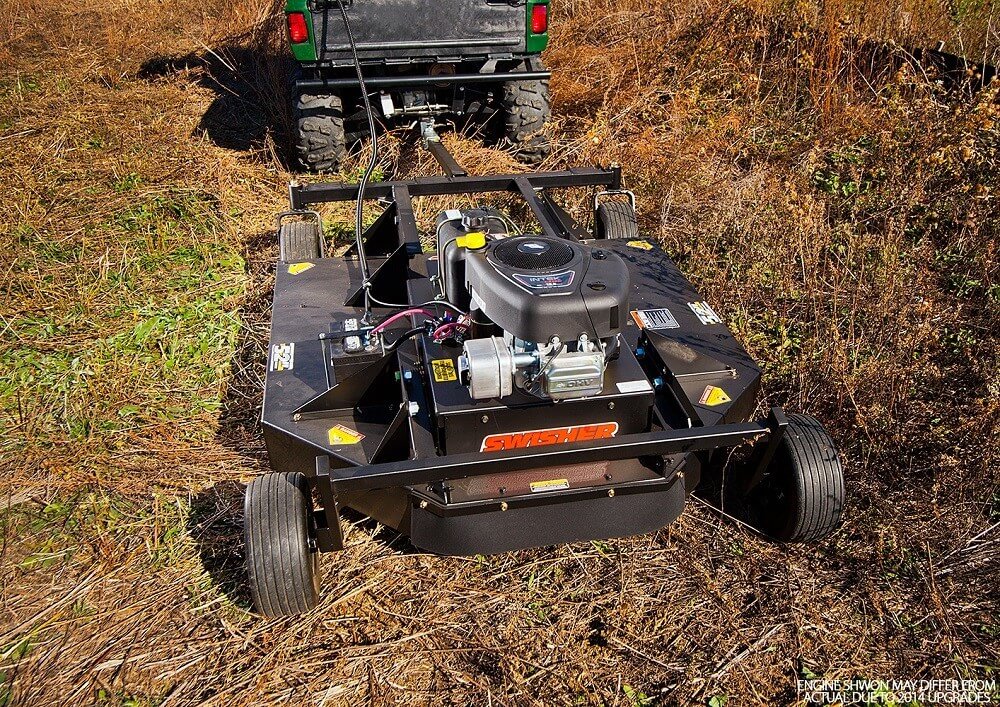
Start with the conditions that will place the greatest demands on the cutter. Vegetation, route width, terrain, and cutting frequency provide a more useful buying framework than choosing by engine power alone.
Match Cutting Capacity to Your Vegetation
Identify whether you primarily need to cut tall grass, dense weeds, or woody stems. Compare that growth with the model’s documented capacity. If the site exceeds those limits, use a different clearing method before establishing a maintenance routine.
Choose a Deck Width for Your Trails and Open Areas
A wider cutting path can reduce passes in open areas, but narrow trails and gates may limit usable machine size. Check overall equipment width as well as cutting width, and allow room for the towing vehicle and turns.
Account for Terrain and Obstacles
Assess slopes, ruts, soft ground, and turning space before selecting equipment. Ground clearance alone does not establish safe slope capability. Use the operating limits of both the cutter and tow vehicle to determine whether the combination suits your property.
Match the Cutter to Your Cutting Frequency
Regular maintenance and occasional cutting of heavily overgrown areas create different workloads. Consider how much ground you maintain and how dense the growth becomes between cuts. For small grassy edges outside the cutter’s practical reach, string trimmers can serve a separate finishing role.
ATV, UTV, and Lawn Tractor Compatibility
A trail cutter must be compatible with the vehicle towing it. Vehicle type alone is not enough to confirm suitability; check the requirements and limitations of both machines before purchasing.
Verify That Your Tow Vehicle Is Suitable
Confirm that the cutter manufacturer permits use with your intended vehicle and that the vehicle manufacturer permits the application. Do not assume every ATV, UTV, or lawn tractor can safely tow and operate every trail cutter.
Check Hitch Requirements and Towing Limits
Compare the required hitch connection, hitch height, equipment weight, and applicable towing limits. Follow the specified operating and transport speeds. A hitch and wheels do not establish approval for public-road towing.
Consider Traction, Braking, and Terrain
The vehicle must be able to control the equipment throughout the intended route. Slopes, wet ground, and loose surfaces can affect traction and stopping ability. A combination that works on firm, level ground may be unsuitable elsewhere.
Check Control Access and Operating Requirements
Review the manual’s instructions for starting, stopping, and operating the cutter from the intended towing setup. Confirm that controls can be installed and used as specified without modifying guards or safety systems.
Rough-Cut Trail Cutter Features and Available Options
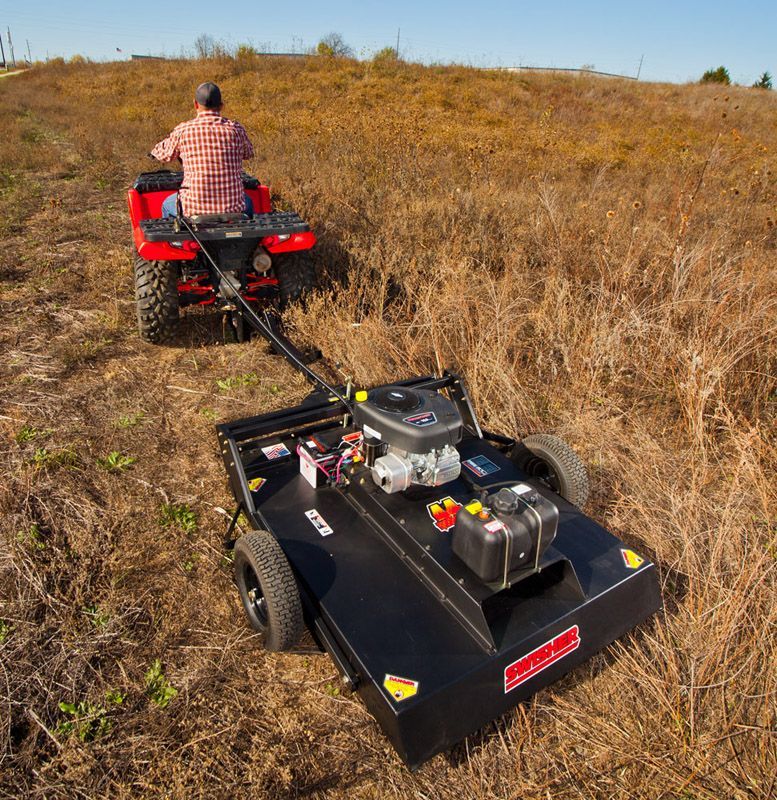
Use individual product specifications to compare operating features. Starting systems, towing configurations, adjustment methods, and accessories should only be treated as available when expressly listed for the model.
Engine Power and Starting Method
For engine-powered models, consider the engine specification alongside cutting capacity and deck width. More power alone does not establish greater brush capability. Check the listed starting method and any associated setup or maintenance requirements.
Blade System and Deck Construction
Review the documented blade arrangement, deck construction, and discharge configuration. These details help explain how the cutter handles vegetation, but they do not replace the manufacturer’s cutting limits or required bystander clearances.
Cutting-Height Adjustment and Wheel Layout
Compare the specified cutting-height range and adjustment procedure. Wheel placement and overall dimensions also matter when judging access around obstacles. Do not assume a cutter can produce a uniform finish across ruts or sharply uneven ground.
Towing Configuration and Model-Specific Options
If a product lists adjustable towing positions or offset capability, check how those settings affect the cutting path and maneuvering space. Verify accessory compatibility by model; do not assume hitch components, replacement parts, or upgrades fit every cutter.
Rough-Cut Trail Cutter Prices and Long-Term Value
Compare purchase price against the work the cutter can perform on your property. A useful value comparison includes fit, cutting capability, upkeep, and the complete cost of getting the machine ready to operate.
What Affects the Purchase Price?
Price differences can reflect cutting width, engine specification, construction, and documented operating features. Compare current product listings directly, including any stated delivery charges or required components, rather than assuming similarly sized cutters have identical equipment.
When Greater Width or Capacity Adds Value
A wider deck can be valuable on accessible, open ground, while greater rated cutting capacity matters when your vegetation requires it. Paying for either adds little value if the machine cannot fit your routes or work with your tow vehicle.
Maintenance and Ownership Costs
Allow for the maintenance supplies and wear parts specified for the model, plus fuel where applicable. Replacement-part pricing, service access, and time spent maintaining the equipment can affect ownership cost alongside the initial purchase price.
Maintenance, Replacement Parts, and Support
Serviceability matters when choosing equipment you expect to use over several seasons. Review maintenance instructions, replacement-part information, and warranty terms before deciding between models.
Routine Engine, Blade, and Drive-System Care
Follow the model’s inspection and service schedule for its engine, blades, drive components, and fasteners as applicable. Perform maintenance only after shutting down and securing the equipment according to the manual.
Replacement Blades and Wear Parts
Identify the correct replacement parts using the model and serial information. Confirm part compatibility and availability rather than relying on appearance or cutting width alone. Incorrect cutting components can affect operation and safety.
Warranty Coverage and Service Support
Read the stated warranty for coverage periods, exclusions, use restrictions, and service procedures. Check whether the engine and cutter have separate warranty arrangements and where to obtain assistance. Do not assume identical coverage across brands or models.

 -22%

 -9%
 -23%

 -25%

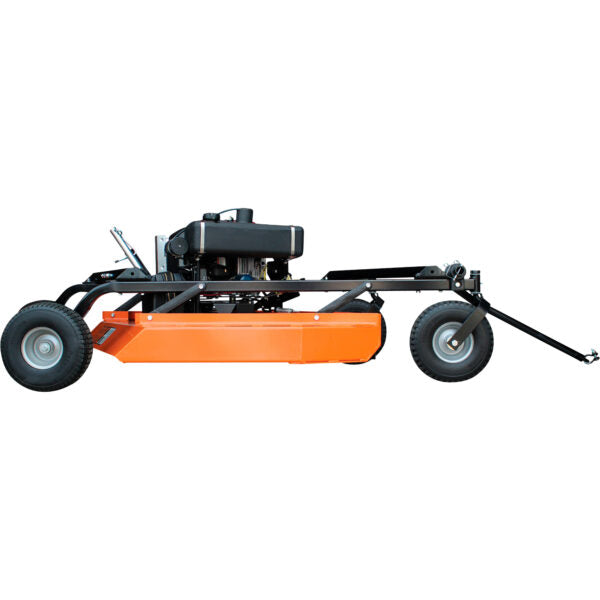
 Brave BRPRC110HE
 -28%

 -8%

 -11%
 -27%
 -18%

 -11%

 -15%


