What Is a Tow-Behind Plug Lawn Aerator?
A tow-behind plug lawn aerator is a lawn attachment that uses hollow tines to extract small plugs of soil as compatible towing equipment pulls it across the grass. Also called a core aerator, it opens spaces in the soil rather than simply pushing a solid spike into the ground.
How Hollow Tines Remove Soil Plugs
As the aerator moves, its hollow tines enter the ground and lift out cores of soil. The resulting openings allow water and air to move into the surrounding soil. Actual penetration depends on the equipment design, soil moisture, compaction, and operating setup.
What Makes an Aerator Tow-Behind?
A tow-behind aerator connects to a compatible towing vehicle instead of being pushed by hand or operated as a self-propelled machine. The hitch connection, loaded attachment weight, and towing limits must match the requirements of both the aerator and the towing vehicle.
Why Plug and Spike Aerators Are Different
Plug aerators remove soil; spike aerators create holes by displacing it. Both may be described as tow-behind lawn aerators, so the category name alone does not identify the aeration method. If removing soil cores is your goal, confirm that the product specifically uses hollow plugging tines.
Benefits of Tow-Behind Plug Aeration
Core aeration is most useful when compacted soil restricts the movement of water and air. It can support better growing conditions, but results depend on identifying the lawn’s actual problem and aerating while the grass can recover.
Relieving Compaction From Repeated Traffic
Foot traffic and equipment use can compress soil, particularly in frequently traveled areas. Removing cores creates openings in that compacted layer and gives the surrounding soil room to loosen. Aeration may need to be repeated over time where traffic continues.
Improving Water Infiltration
Compacted surfaces can slow water entry and contribute to runoff. Plug aeration creates pathways through the surface that can help water enter the soil. It does not correct every drainage problem: poor grading, persistent saturation, or deeper restrictive layers may require other work.
Supporting Overseeding and Root Growth
Aeration can improve conditions for root development and create additional opportunities for seed-to-soil contact during overseeding. Suitable seed, proper timing, and consistent moisture remain essential. For applying seed afterward, compare spreaders suited to the material and coverage you need.
Tow-Behind Plug Aerators vs. Other Lawn Aerators
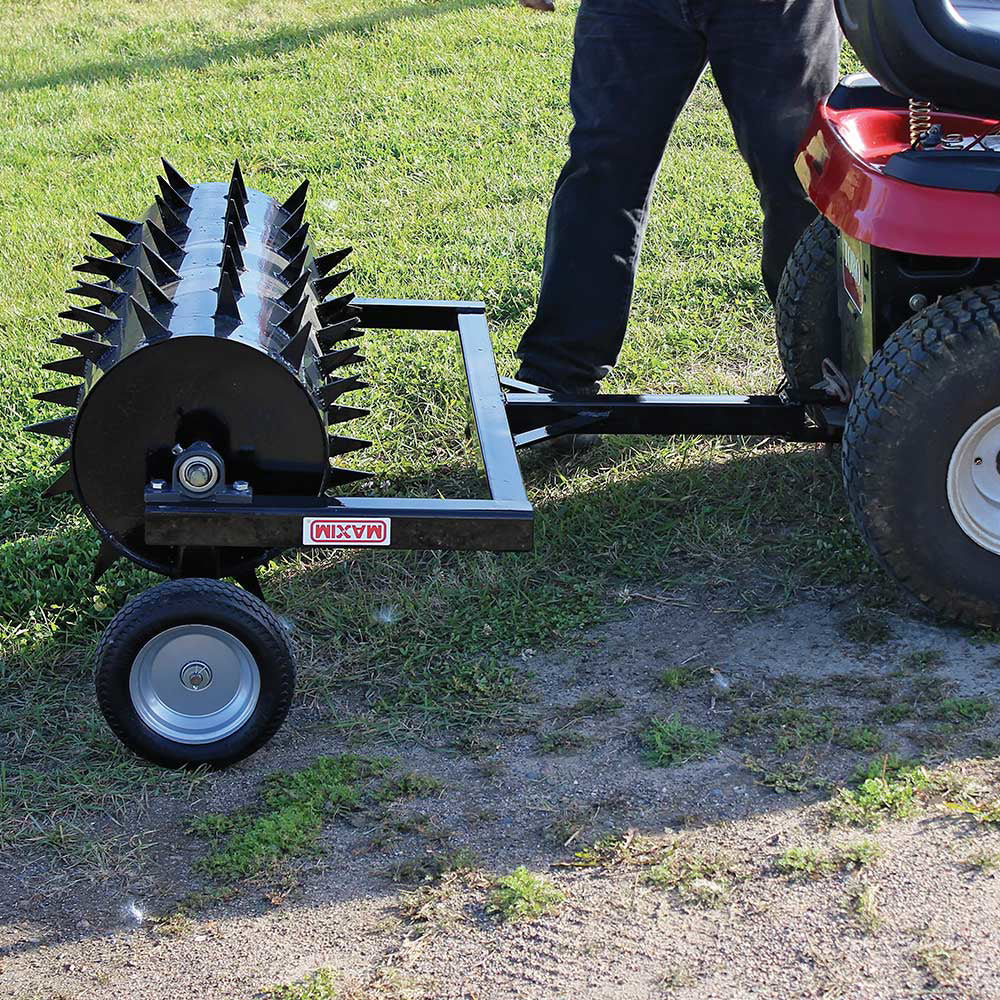
The main differences between lawn aerators are how they penetrate the soil and how they move across the property. Choose the mechanism first, then consider coverage, access, and operating effort.
Plug Aerators vs. Spike Aerators
A plug aerator extracts soil cores, making it the more direct choice when the objective is removing material from compacted ground. A spike aerator punctures the surface without extracting a core. These mechanisms are different, and a spike model should not be treated as interchangeable with a plug model.
Tow-Behind vs. Walk-Behind Core Aerators
A tow-behind core aerator can suit open lawns where compatible towing equipment has room to operate. Walk-behind core aerators may be more practical where gates, narrow passages, and closely spaced landscaping restrict access. Compare the actual equipment dimensions and operating requirements rather than choosing solely by lawn acreage.
Powered Coverage vs. Manual Plug Aeration
A manual hollow-tine tool can be practical for isolated compacted patches or small areas. A tow-behind attachment reduces the repetitive effort of covering a larger accessible lawn, but requires towing equipment, turning space, and storage.
Aeration vs. Dethatching
Aeration addresses soil compaction; dethatching removes excess thatch from near the lawn surface. They solve different problems. If a dense thatch layer is the main concern, compare lawn dethatchers rather than expecting aeration alone to remove it.
How to Choose the Right Tow-Behind Plug Lawn Aerator
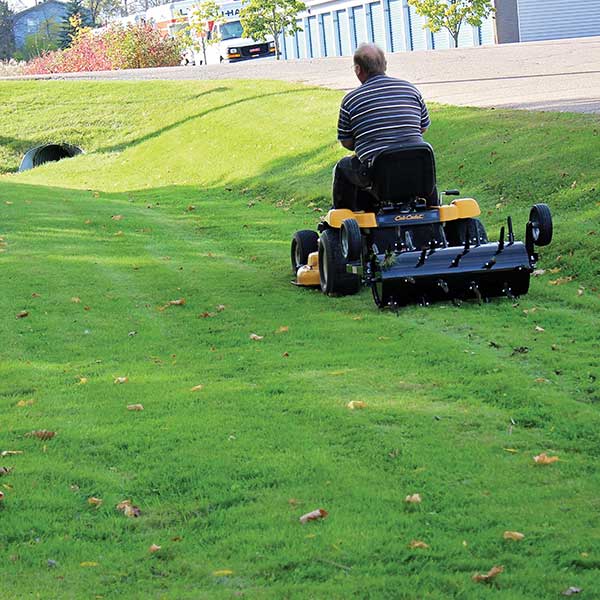
The right aerator fits the lawn, the access route, and the towing equipment. Start with compatibility and maneuverability before comparing capacity or price.
Match Working Width to the Lawn Layout
A wider working path can reduce the number of passes needed across open ground. A narrower attachment may be easier to maneuver around beds, trees, and confined areas. Measure gates and storage entrances against the aerator’s overall width, which may differ from its working width.
Verify Hitch and Loaded-Weight Compatibility
Confirm the required hitch connection and the aerator’s operating weight, including any permitted ballast. Check the towing vehicle’s manual for attachment restrictions, towing capacity, and terrain limits. A hitch that physically connects does not establish that the combination is approved.
Check Riding Mower and Zero-Turn Restrictions
When evaluating lawn mowers for towing, use the specific manufacturer’s attachment guidance. The same applies to zero-turn mowers: towing approval and limits vary by model. Avoid assuming that every mower can safely pull a loaded aerator.
Consider Slopes, Obstacles, and Turning Space
Choose equipment that can operate within the terrain limits of both machines. Account for irrigation heads, shallow buried lines, exposed roots, and tight turns. If you already use equipment such as finish-cut tow mowers, verify the aerator’s requirements separately; compatibility with one attachment does not establish compatibility with another.
Tow-Behind Plug Aerator Features and Options
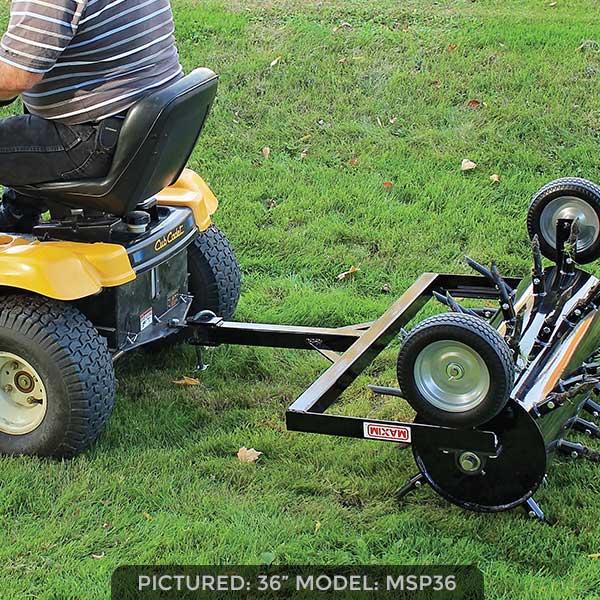
Use the specifications on each product listing to establish which features are included. Working widths, tine arrangements, ballast allowances, and transport provisions are model-specific comparison points, not features to assume across the collection.
Plugging Mechanism and Working Coverage
For core removal, first verify that the attachment uses hollow plugging tines. Then compare working width and any documented tine-spacing or coverage information. Tine count alone does not establish how thoroughly a machine will aerate a lawn.
Rated Penetration and Actual Plug Depth
A published maximum depth describes equipment capability under suitable conditions, not a guaranteed result on every pass. Dry or heavily compacted ground can limit penetration. Evaluate depth alongside soil conditions and the manufacturer’s operating instructions.
Ballast Allowance and Operating Weight
If a model permits added ballast, check its specified capacity and loading instructions. More weight is not automatically better: it increases the load on the attachment and towing vehicle. Do not assume that a weight tray or a particular ballast capacity is included unless the listing confirms it.
Transport, Construction, and Service Requirements
Review any documented transport wheels, tine-lift provisions, frame details, and maintenance requirements. Confirm how the attachment must cross hard surfaces and whether replacement wear parts are available for that exact model. Treat accessories and replacement components as separate purchases unless explicitly included.
Tow-Behind Plug Aerator Prices and Long-Term Value
Evaluate purchase price against the aeration method, compatibility, and expected workload. An inexpensive attachment is poor value if it cannot remove the soil cores you need or operate with your existing equipment.
What to Compare at Different Prices
Compare documented working width, construction, operating provisions, and included equipment. Check whether prices refer to plug or spike aerators before comparing them. A lower price on a different aeration mechanism is not necessarily a better deal for your application.
Buying vs. Renting a Core Aerator
Ownership can make sense when you expect repeated use and have compatible towing equipment and storage. Renting may suit occasional work, limited storage, or properties better served by a walk-behind machine. Compare the purchase cost with local rental charges, transportation, and the number of uses you realistically expect.
Total Ownership and Delivered Cost
Allow for required assembly, maintenance, storage, and eventual replacement of worn components. Check product-specific shipping charges, delivery arrangements, and warranty terms before ordering. These details vary and should be included in the comparison rather than assumed from the advertised equipment price.
When and How to Use a Tow-Behind Plug Aerator
Timing and soil preparation affect core removal as much as equipment selection. Follow the aerator and towing-vehicle manuals for setup, speed, ballast, turning, and transport.
Aerate While Your Grass Is Actively Growing
Cool-season lawns are commonly aerated in early fall, while warm-season lawns are generally aerated during active growth in late spring or early summer. Local climate and grass type determine the best window. Avoid aerating dormant, drought-stressed, or otherwise struggling turf.
Work With Moist, Firm Soil
Soil should be moist enough for the tines to penetrate without being saturated. Very dry ground can resist core removal, while overly wet ground can rut or smear. Check a small area before treating the entire lawn.
Set Up the Equipment and Plan Passes
Mark irrigation components and other vulnerable obstacles, then configure the aerator according to its manual. Use only approved ballast and operating speeds. Follow the manufacturer’s instructions for turns and additional passes instead of assuming that repeated coverage or more weight always improves results.
Leave Soil Cores to Break Down
Extracted cores can generally remain on the lawn to weather and break down. Maintain appropriate moisture if overseeding, and follow seed-specific establishment guidance. Aeration creates openings; ongoing lawn care determines how effectively the turf benefits from them.


 -15%JRCO JRCOMOUNT

 -13%

 -14%

 -15%

 -9%
 -8%

 -12%

 -13%

 -8%

 -15%

 -13%

 -8%
 -5%

 -12%


