What Is a Gas Log Splitter?
A gas log splitter is a self-contained machine powered by a gasoline engine. Most models use a hydraulic system to drive a wedge through a log or push the log against a stationary wedge. This mechanical force separates rounds into smaller pieces for firewood, drying, storage, handling, or further processing.
How Gas-Powered Log Splitters Work
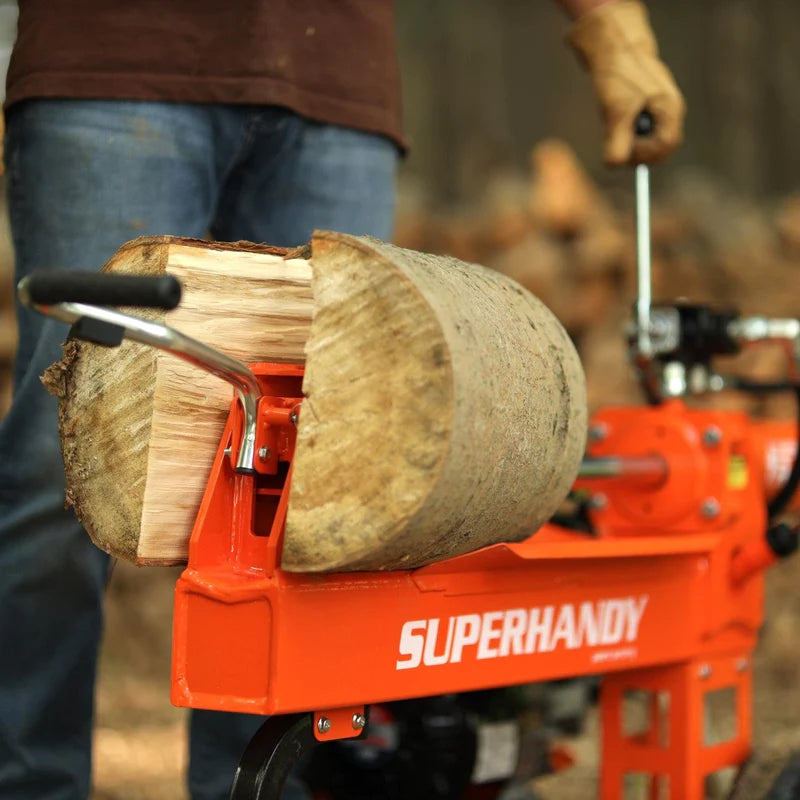 The gasoline engine powers a hydraulic pump, which moves fluid through the system and extends the hydraulic cylinder. The cylinder moves the ram, wedge, or log through the splitting stroke. Controls allow the operator to engage and retract the mechanism according to the manufacturer's operating procedure.
Engine size, hydraulic design, splitting force, cycle time, and maximum log capacity vary by model. Product specifications should be compared individually rather than assumed to apply to every gas-powered splitter.
Gas Log Splitters vs. Manual Splitting
Axes and splitting mauls depend on repeated physical effort and can become impractical when processing large, hard, knotty, or irregular rounds. A gas-powered wood splitter supplies consistent mechanical force, reducing the amount of manual striking required and making higher-volume firewood processing more manageable.
Logs still need to be cut to an acceptable length, positioned correctly, and handled safely. A powered splitter reduces splitting labor but does not eliminate proper log preparation or operator involvement.
Who Should Use a Gas Log Splitter?
Gas models are commonly selected by homeowners who heat with firewood, rural property owners, farms, ranches, tree-service crews, and firewood sellers. They are especially useful when the splitter must operate around a property or at a worksite without convenient electrical power.
For smaller quantities of manageable wood near a suitable outlet, electric log splitters may offer a practical alternative without gasoline, engine exhaust, or as much engine-related maintenance.
Benefits of Gas-Powered Log Splitters
Gas log splitters combine self-contained power with a broad range of available capacities and configurations. Their principal advantages are mobility, sustained productivity, and the ability to handle applications ranging from routine residential firewood to demanding farm or commercial work.
High Splitting Force for Difficult Wood
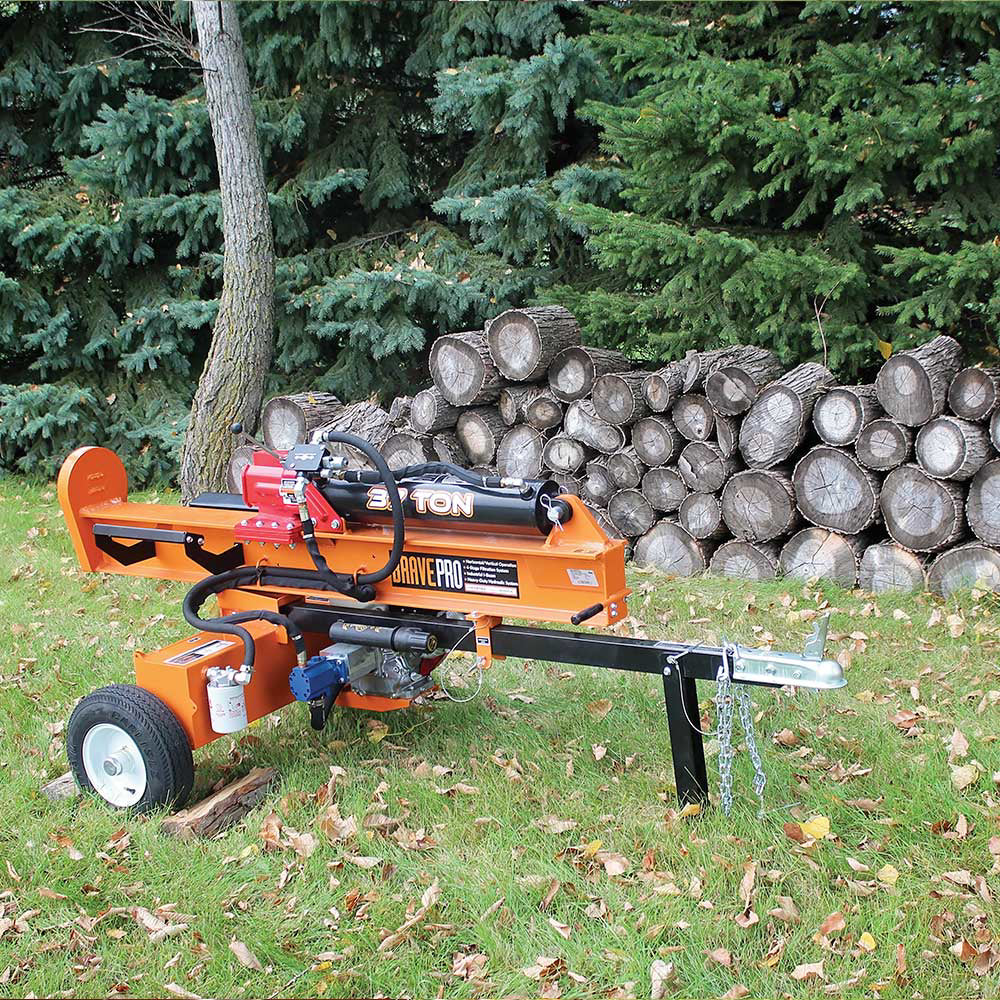 Gas-powered hydraulic splitters are available across a wide range of rated splitting forces. Higher-force configurations can be useful when working with large, dense, green, knotty, or irregular wood that places greater demands on the splitting system.
Rated tonnage is not a guarantee that a machine will split every log. Species, moisture, diameter, length, knots, and grain direction can all influence how difficult a particular round is to separate.
Operation Away from Electrical Power
A gas engine allows the splitter to operate without an electrical outlet or extension cord. This makes gas models suitable for woodlots, farms, remote parts of a property, storm-cleanup areas, and other locations where electrical service is unavailable or inconvenient.
Gas engines produce exhaust and should be operated only where allowed by the manufacturer, with adequate outdoor ventilation and all required safety precautions.
Productivity for Larger Firewood Volumes
Gas log splitters are often a strong fit for people who process several cords of firewood, split throughout the year, or need dependable production during concentrated work sessions. Splitting force matters, but productivity also depends on cycle time, log handling, wedge design, working height, and operator workflow.
Self-Contained Power and Practical Mobility
Unlike tractor- or skid-steer-mounted machines, a gas splitter carries its own power source and does not require compatible heavy equipment. Many models can be moved around a property or transported to a work area, although weight, wheel design, hitch configuration, towing speed, and road-use limitations vary.
Buyers who already own suitable equipment may also want to compare 3-point tractor log splitters or skid steer log splitters.
How to Choose the Right Gas Log Splitter
The best gas log splitter is the machine that matches your wood, workload, property, and preferred workflow. Choosing by tonnage alone can lead to paying for unnecessary capacity or overlooking features that have a greater effect on daily use.
Consider Wood Species, Diameter, and Condition
Large-diameter, dense, green, knotty, or twisted-grain wood generally requires more splitting force than smaller, straight-grained, seasoned rounds. Consider the most difficult wood you routinely encounter rather than basing your decision only on the easiest material in the pile.
Maximum log length and diameter are model-specific. Verify those ratings against the typical rounds you plan to process, leaving room for occasional larger or less uniform pieces.
Match the Machine to Your Splitting Volume
An occasional user preparing a small amount of seasonal firewood may prioritize simple operation, storage, and price. Someone heating primarily with wood or producing firewood for sale may place more importance on cycle time, log handling, engine serviceability, and sustained productivity.
Farm, acreage, tree-service, and commercial users should also consider how frequently the machine will move between work areas and how easily it fits into the rest of their wood-processing workflow.
Compare Splitting Force and Cycle Time Together
Splitting force describes the rated force available during the stroke, while cycle time generally indicates how long the splitting mechanism takes to complete an operating cycle. Higher tonnage can help with difficult wood, while a shorter cycle can improve output when processing many manageable rounds.
Neither specification should be evaluated alone. Hydraulic performance, wedge configuration, engine output, log positioning, and operator pace all contribute to real-world productivity.
Evaluate Capacity, Orientation, and Portability
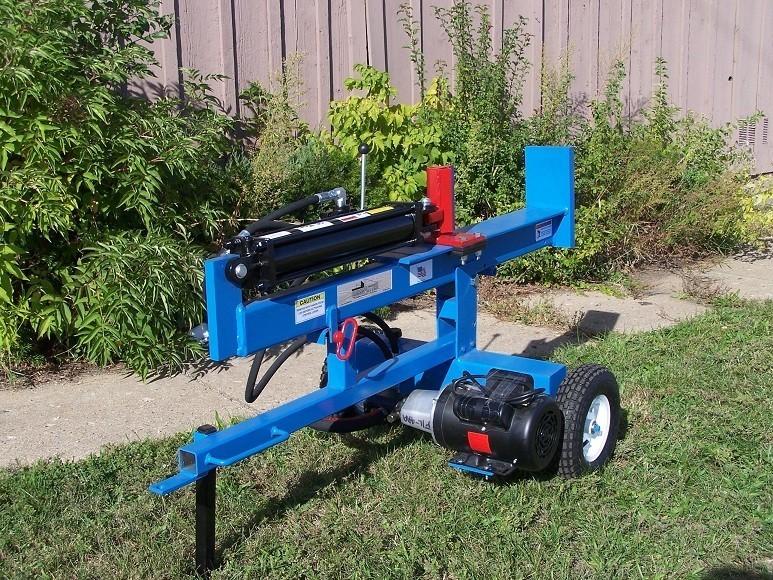 Check the rated maximum log length and diameter, then determine whether horizontal-only or horizontal/vertical operation better fits your wood. If the splitter must move around an acreage or between properties, also compare machine weight, tires, handle placement, hitch design, and approved transportation method.
Wheels or a hitch do not automatically make a log splitter suitable for highway towing. Always verify the manufacturer's stated towing speed and public-road requirements for the specific model.
Choose for the Work You Actually Do
A higher-priced or higher-tonnage splitter is not automatically the better purchase. Focus on the combination of capacity, operating position, cycle time, mobility, serviceability, and included features that will be useful during your normal splitting sessions.
What Tonnage Gas Log Splitter Do You Need?
Log splitter tonnage is a rated measure of splitting force and one of the most common ways gas models are categorized. There is no universal tonnage recommendation because wood characteristics and workload vary considerably from one buyer to another.
20–25 Ton Gas Log Splitters
Models in this general range may suit homeowners processing typical firewood rounds and buyers who want more mobility or a smaller equipment footprint. Their suitability still depends on the manufacturer's rated log capacity and the size, hardness, moisture, knots, and grain of the wood.
25–30 Ton Gas Log Splitters
This range can provide additional force for users who regularly encounter larger, denser, greener, or less uniform rounds. It may also appeal to buyers processing more firewood who want added capability without automatically moving to the largest available machine.
30–40 Ton Gas Log Splitters
Higher-tonnage models are commonly considered for difficult wood, frequent splitting, farm or acreage use, and other demanding workloads. Compare their cycle time, physical size, weight, log-handling features, and storage requirements in addition to splitting force.
40+ Ton and Higher-Capacity Models
Very high-force machines may be appropriate for specialized or high-demand applications, but extra capacity can come with additional size, weight, fuel use, and purchase cost. Confirm that the machine's overall design—not just its tonnage—fits the logs and production volume involved.
Why More Tonnage Is Not Always Better
Tonnage does not measure every aspect of performance or ownership value. A properly sized splitter with a suitable cycle time, usable working position, appropriate log capacity, and efficient handling setup may outperform a larger machine within a buyer's actual workflow.
Hydraulic tonnage also should not be treated as directly interchangeable with the ratings used for kinetic log splitters, which store and release rotational energy rather than using hydraulic pressure for the splitting stroke.
Horizontal, Vertical, and Towable Gas Log Splitter Options
Operating orientation and mobility influence how logs are loaded, positioned, and moved through the splitting process. Compare these configurations according to the size of your rounds, your ability to lift them, and where the machine will be used.
Horizontal Gas Log Splitters
Horizontal operation places the log on a beam or work surface for the splitting stroke. This position can provide a comfortable, repeatable workflow when rounds are small or light enough to lift safely onto the machine.
Some models operate only horizontally, while others convert between horizontal and vertical positions. Verify the listed orientation for each product.
Vertical Gas Log Splitters
 Vertical operation can reduce the need to lift a large, heavy round to beam height. Depending on the model and manufacturer instructions, the operator may be able to roll or reposition the wood near ground level before splitting it.
Not every gas splitter operates vertically. Use only approved operating positions and follow the manufacturer's procedures for converting and stabilizing the machine.
Horizontal/Vertical Log Splitters
A dual-position splitter provides flexibility for mixed firewood. The horizontal position can support an efficient rhythm with manageable rounds, while the vertical position can help when individual pieces are too heavy or awkward to lift comfortably.
Towable and Portable Designs
Portable models may include wheels, handles, hitches, or other features intended to help move the splitter. Some are designed primarily for movement around private property, while others have model-specific towing provisions.
Before towing, check the approved maximum speed, tire condition, hitch connection, safety requirements, lighting requirements, and public-road restrictions. Never assume a splitter is highway-towable based only on the presence of wheels or a coupler.
Choosing the Right Configuration
Choose horizontal-only operation when the logs are manageable and a consistent working height is the priority. Consider horizontal/vertical capability when large rounds are common, and give added weight to portability when wood piles or worksites are spread across a property.
Gas Log Splitter Features to Compare
Specifications and working features determine whether a splitter fits the job after the engine starts. Comparing models across the same practical criteria makes it easier to separate genuinely useful capabilities from features that may not matter for your application.
Engine and Starting System
Compare engine manufacturer, displacement, starting method, fuel capacity, service requirements, and replacement-part support using the specifications for each model. Engine details vary, so no single horsepower or displacement figure should be assumed across the category.
Hydraulic System and Cycle Time
The hydraulic pump, cylinder, control valve, reservoir, hoses, and fittings work together to create and control splitting force. Review published cycle time alongside rated tonnage, since a powerful machine with a slower cycle may suit a different workload than a faster machine designed for steady production.
Maximum Log Capacity
Maximum log length and diameter determine whether a machine is rated to accept the rounds you plan to split. These limits vary by model and should not be inferred from tonnage alone. Cutting rounds to a consistent, supported length can also improve handling and workflow.
Wedges, Cradles, and Work Tables
Wedge design affects how the log separates, while cradles and work tables can help support split pieces and reduce repeated retrieval from the ground. Available equipment may include two-way wedges, compatible multi-way wedges, log cradles, covers, and other log splitter accessories.
Accessory compatibility is model-specific. Confirm mounting requirements and approved applications before purchasing an add-on wedge or handling attachment.
Controls, Safety Features, and Warranty
Review the operating controls, protective components, maintenance access, product manual, and warranty terms for each machine. Keep hands away from the wedge and splitting zone, operate on a stable surface, wear appropriate eye and foot protection, and keep bystanders away.
Collection-page guidance is not a substitute for the manufacturer's manual. Follow all model-specific operating, maintenance, and safety instructions.
Gas Log Splitter Prices and Long-Term Value
Gas log splitter prices vary according to splitting force, engine, hydraulic system, capacity, construction, operating orientation, included features, and intended workload. The strongest value comes from choosing a machine that can perform the required work without paying for capabilities you are unlikely to use.
What Affects Gas Log Splitter Prices?
Higher rated tonnage, larger engines, more substantial hydraulic components, horizontal/vertical operation, faster cycle times, and added log-handling features can all affect price. Brand, warranty, parts availability, and overall machine design may also influence the purchase cost.
Homeowner vs. Higher-Volume Models
A homeowner splitting a modest seasonal supply may find better value in a simpler machine with appropriate capacity and convenient storage. Buyers processing several cords, working across a farm, or producing firewood commercially may benefit from paying more for productivity, capacity, durability, or handling features.
Labels alone do not determine suitability. Compare the documented specifications and intended application of each model before treating it as appropriate for high-volume or commercial work.
Upfront Price vs. Productivity
A lower purchase price can be attractive, but cycle time, loading effort, operating orientation, and downtime can have a larger long-term effect for frequent users. Conversely, occasional users may not benefit enough from maximum tonnage or the fastest available cycle to justify a more expensive machine.
Buying vs. Renting a Gas Log Splitter
Renting may make sense for a one-time cleanup or a small, concentrated pile of wood. Ownership may provide better value for people who split every season, heat regularly with firewood, maintain multiple properties, or want the machine available whenever new logs arrive.
When comparing the two, consider rental frequency, transportation, scheduling, fuel, maintenance, storage, and the amount of work completed during each session.
Maintenance, Storage, and Ownership Costs
Long-term ownership can involve gasoline, engine oil, hydraulic fluid, filters, spark plugs, replacement hoses, tires, and other model-specific service items. Following the maintenance schedule and storing the splitter as directed can help preserve dependable operation.
Protecting finished firewood matters as well. Properly sized firewood racks can keep split wood organized and elevated while it seasons or awaits use.


 -18%
-18%
 -13%
-13%
 -13%
-13% -14%
-14%
 -8%
-8%
 -8%
-8%


