What Is an Electric Log Splitter?
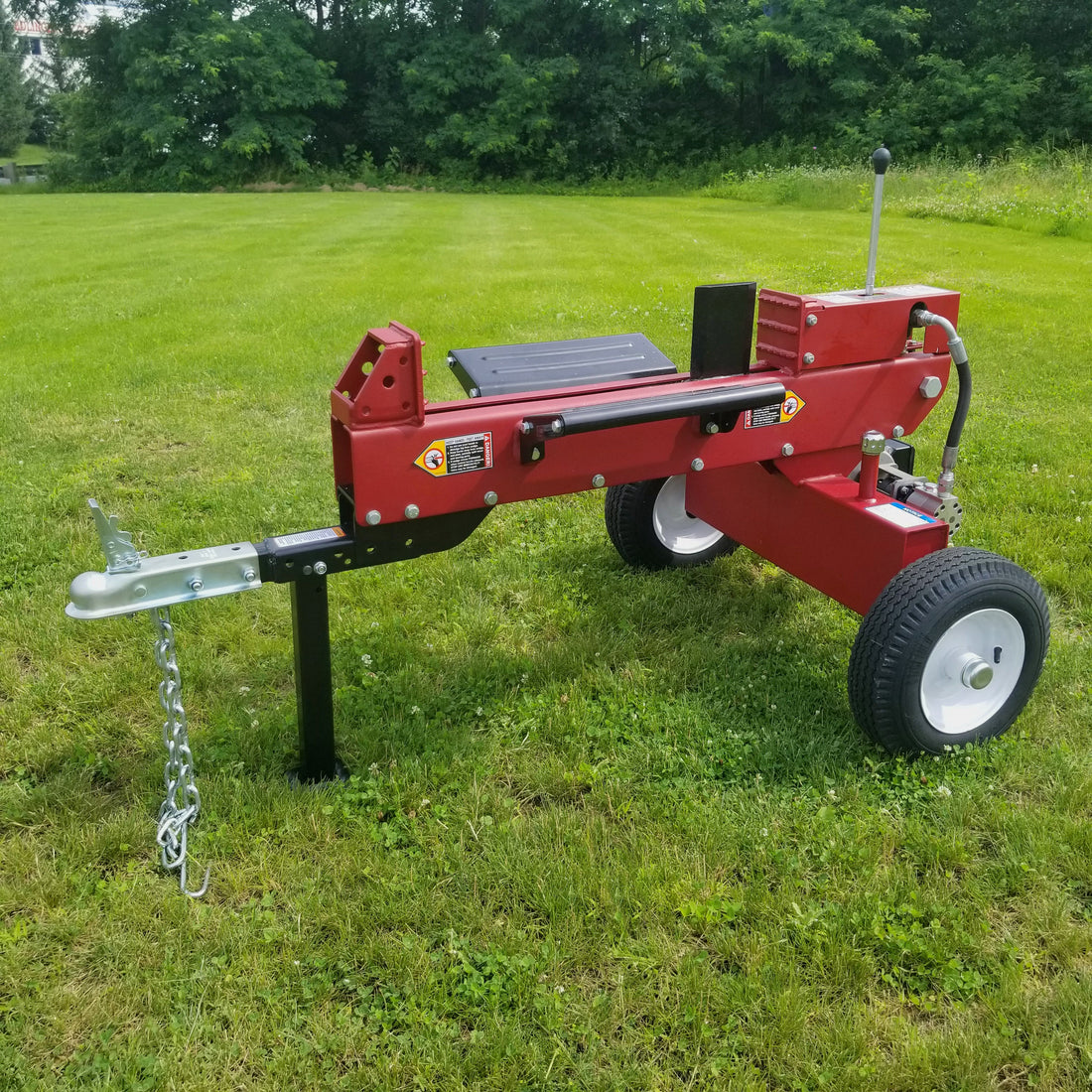
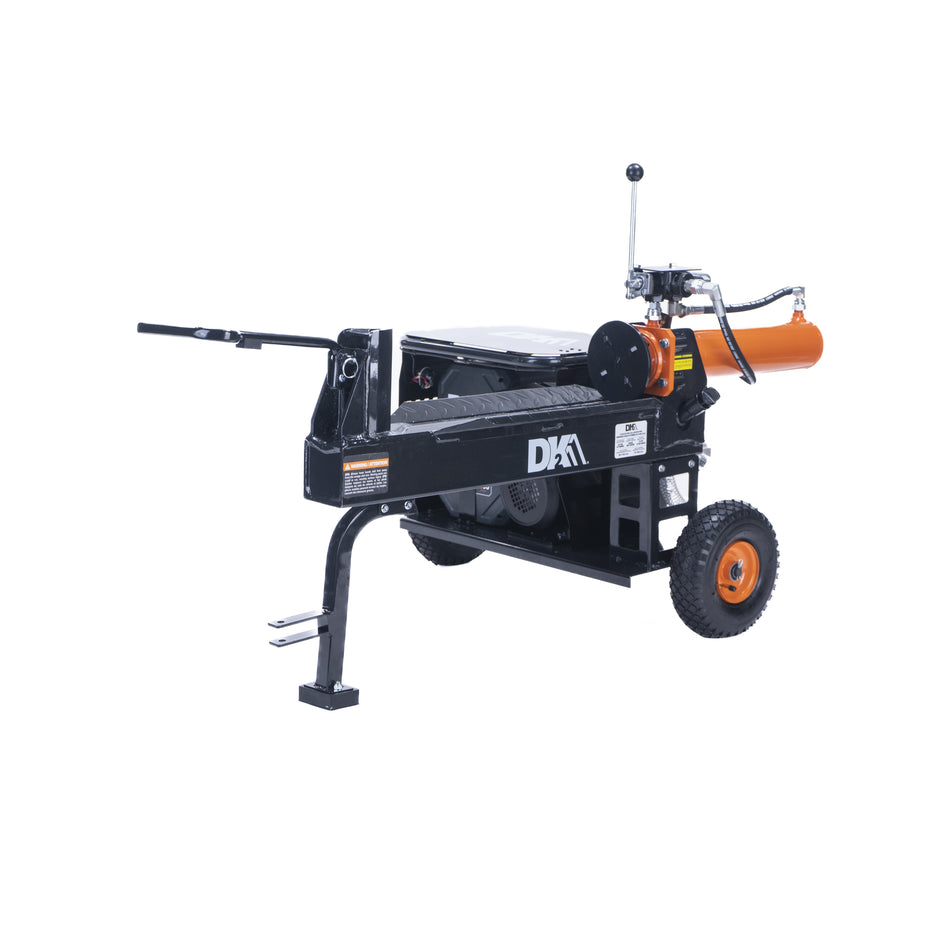
An electric log splitter is a powered machine that uses an electric motor instead of a gasoline engine to split logs into smaller pieces for firewood, drying, storage, or handling. Most electric models use a hydraulic system to generate splitting force, combining the convenience of electric power with the controlled force of a conventional hydraulic wood splitter.
How Electric Log Splitters Work
In a typical hydraulic electric log splitter, the electric motor powers a hydraulic pump. Hydraulic pressure moves a ram that drives the log toward a splitting wedge or drives the wedge through the wood, depending on the machine's design.
The splitter's rated force is commonly expressed in tons. Tonnage is useful when comparing machines, but it should be considered alongside log capacity, cycle time, operating configuration, and the type of wood you expect to split.
What Types of Wood Can Electric Log Splitters Handle?
Capability varies substantially by model. Log diameter and length matter, but species, density, moisture content, knots, and irregular or twisted grain can also affect how much splitting force is required. A smaller, straight-grained seasoned round may be considerably easier to split than a similarly sized green or knotty round.
Always compare the manufacturer's rated log capacity and splitting force with the wood you actually process rather than assuming that a particular tonnage can handle every log.
Who Are Electric Log Splitters Best For?
Electric splitters can be a strong fit for homeowners who process manageable quantities of firewood and normally work near an appropriate electrical power source. They are also worth considering when easy starting, lower operating noise, and avoiding gasoline and engine-related maintenance are priorities.
For larger workloads, difficult wood, or locations without convenient electrical power, it can also be useful to compare gas log splitters and other splitter types before choosing a machine.
Why Choose an Electric Log Splitter?
Electric log splitters solve many of the same basic firewood-processing tasks as gas-powered hydraulic machines, but with a different set of ownership and operating characteristics. Their advantages are particularly relevant for residential users who have suitable electrical power where they split wood.
Simple Starting and Operation
An electric motor eliminates the starting procedures associated with a gasoline engine. There is no gasoline to add and no gas engine to start before splitting, making an electric wood splitter convenient for periodic residential firewood processing.
Less Engine-Related Maintenance
Because an electric splitter does not have a gasoline engine, it eliminates engine-related tasks associated with fuel and gasoline-engine upkeep. Electric hydraulic splitters still require appropriate care, however, and owners should follow the manufacturer's maintenance schedule for the hydraulic system, moving components, electrical system, and other service points.
Lower Noise and No Engine Exhaust
Electric log splitters generally operate more quietly than typical gas-powered models and do not produce gasoline-engine exhaust at the machine. Those characteristics can be useful when splitting around a home or other residential setting.
Operating location still needs to comply with the manufacturer's instructions. The absence of a gas engine does not mean that every electric splitter is approved for every indoor, enclosed, wet, or outdoor environment.
Practical for Residential Firewood Processing
For someone splitting smaller quantities of reasonably manageable firewood near a suitable electrical source, electric power can provide a practical balance of capability and convenience. Buyers processing substantially more wood should also evaluate cycle time, splitting force, log handling, and overall workflow rather than choosing solely by power source.
Electric vs. Gas Log Splitters
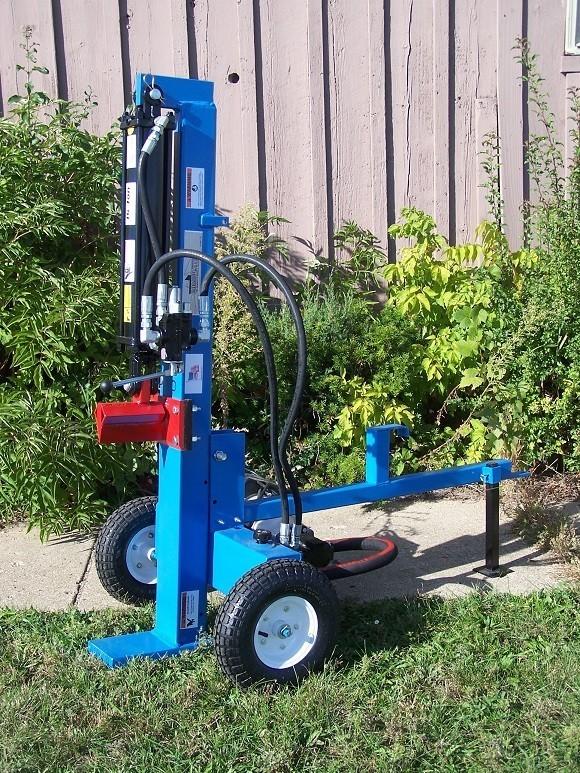
Neither electric nor gas power is universally better for splitting wood. The better choice depends on the logs you process, how much firewood you split, where you work, and whether dependable electrical power is available at the splitting location.
Splitting Power and Capacity
Electric log splitters are available in different splitting-force and log-capacity ratings, but electric machines are commonly positioned toward residential and lower-volume applications. Gas splitters are often available in higher-force configurations suited to more demanding workloads.
Power source alone does not determine capability. Compare the actual tonnage, maximum log dimensions, cycle time, and other model-specific specifications before deciding which machine fits your wood.
Portability and Access to Power
The biggest practical distinction is often where the splitter will operate. An electric model requires an appropriate electrical source, while a gas machine can operate independently of an outlet. That can make gas attractive for woodlots, acreage, farms, and other locations where electricity is inconvenient or unavailable.
Noise, Fuel, and Exhaust
Electric splitters require no gasoline, produce no gasoline-engine exhaust, and generally create less operating noise than typical gas models. Gas machines trade those advantages for greater independence from electrical power and, depending on the model, access to higher splitting-force configurations.
Maintenance and Operating Considerations
Electric machines eliminate gasoline-engine maintenance, although hydraulic and mechanical components still require proper care. Gas splitters add an engine and fuel system to the maintenance picture, so buyers should consider ownership requirements as well as initial machine capability.
When Should You Choose Electric Instead of Gas?
An electric log splitter is often a logical choice for residential firewood processing near suitable power when convenience, lower noise, and avoiding gasoline are priorities. Gas can make more sense for buyers who work away from electrical power or regularly tackle higher-volume or more demanding splitting jobs.
Buyers focused primarily on speed may also want to compare kinetic log splitters, which use stored rotational energy rather than hydraulic pressure for the splitting stroke and have different performance characteristics from conventional hydraulic machines.
How to Choose the Right Electric Log Splitter
Choosing an electric log splitter is less about finding the highest number on a specification sheet and more about matching the machine to your wood and workload. Splitting force, log capacity, wood condition, cycle time, and frequency of use all contribute to the decision.
Choose the Right Splitting Force
Electric log splitters are commonly rated by splitting force in tons. More tonnage can provide additional force for difficult logs, but higher tonnage does not automatically make one splitter a better choice for every user.
Consider the diameter, species, density, moisture content, knots, grain, and length of the logs you typically process. Larger, harder, green, knotty, or irregular rounds can place greater demands on a splitter than smaller, straight-grained, seasoned wood.
Check Maximum Log Length and Diameter
Rated log capacity tells you what size material a particular machine is designed to accommodate. Maximum log length and diameter vary by model, so verify both specifications for each electric splitter you are considering rather than assuming a category-wide capacity.
Consider Cycle Time
Cycle time can become increasingly important as the amount of wood you process grows. A shorter operating cycle can improve productivity, but the number should be considered together with splitting force, hydraulic performance, wedge configuration, log handling, and operator workflow.
Match the Splitter to Your Firewood Volume
Someone occasionally preparing firewood for a fireplace has different requirements from someone processing several cords each year. As splitting volume increases, productivity factors such as cycle time, loading effort, operating position, and the ability to handle difficult rounds become increasingly important.
Consider Other Power Sources for Demanding Applications
If your typical work exceeds what the electric models you are comparing are designed to handle, consider other splitter configurations rather than simply buying on tonnage. Buyers who already own compatible equipment may also compare 3-point tractor log splitters or skid steer log splitters. Compatibility requirements for attachment-style splitters must always be verified for the host machine.
Electric Log Splitter Features and Options
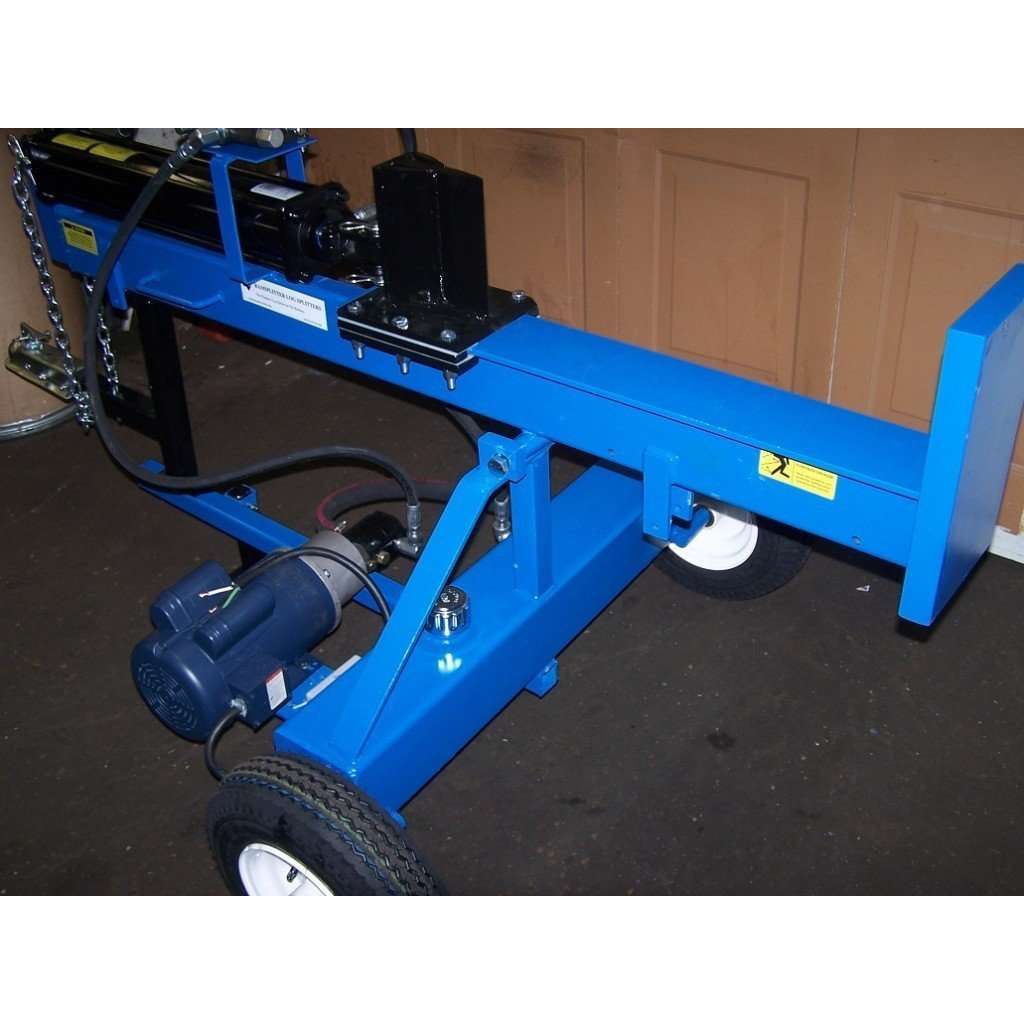
Once you have narrowed the required splitting force and capacity, compare the features that affect how an electric log splitter fits your workspace and firewood-processing routine. Available features differ by model, so use individual product specifications rather than assuming every electric splitter has the same configuration.
Motor and Electrical Requirements
The electrical supply is a fundamental consideration when choosing an electric wood splitter. Motor and power requirements vary, so verify the manufacturer's electrical specifications and make sure an appropriate power source is available where you plan to operate the machine.
Any extension cord or electrical setup should comply with the manufacturer's requirements. An unsuitable electrical supply or cord can create performance and safety problems.
Horizontal vs. Horizontal/Vertical Operation
Some hydraulic splitters operate horizontally, while certain models can also operate vertically. Horizontal splitting works well when rounds can be comfortably loaded onto the machine. Vertical operation can reduce the need to lift some large, heavy rounds onto a horizontal beam because they may instead be rolled or positioned at ground level.
Do not assume an electric splitter supports both orientations. Check the operating positions specified for the individual model.
Cycle Time and Return Operation
Cycle time helps indicate how quickly a splitter can move through its operating cycle and can have a meaningful effect on productivity. Return operation and control design can also influence workflow, particularly when processing a larger pile of firewood.
Log Handling Features
Depending on the model, features such as log cradles or work tables can help support split wood and organize the splitting process. These features can become more valuable as log volume increases because handling and repositioning wood are significant parts of the overall workflow.
Mobility and Storage
Consider how easily the machine can be positioned where you split and stored when the job is finished. Wheels, handles, machine dimensions, and overall configuration vary, so evaluate the specific design rather than assuming every electric splitter offers the same level of portability.
Accessories for Your Splitting Setup
Depending on the specific machine and your workflow, compatible log splitter accessories may help with equipment protection, splitting, or wood handling. Always verify that an accessory is designed for the particular splitter before use.
Electric Log Splitter Prices and Long-Term Value
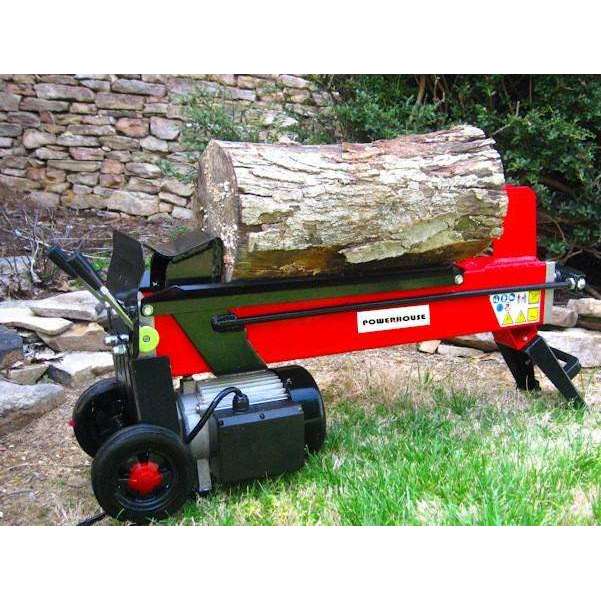
Electric log splitter prices vary according to machine capability, construction, splitting force, capacity, motor and hydraulic system, and included features. Instead of choosing solely by purchase price, compare what each machine provides for the type and amount of wood you expect to process.
What Affects Electric Log Splitter Prices?
Splitting force is one factor, but it is not the only one. Log capacity, hydraulic components, motor requirements, machine design, operating orientation, cycle time, construction, included features, brand, and other model-specific characteristics can all contribute to price differences.
Entry-Level vs. More Capable Electric Splitters
A lower-priced machine may be entirely appropriate for occasional use with manageable firewood. Buyers working with larger, harder, knotty, or more irregular rounds may place greater value on additional splitting force, capacity, or features that improve log handling and productivity.
Purchase Price vs. Ownership Costs
Electric splitters require no gasoline and eliminate gasoline-engine maintenance, which can simplify long-term ownership. They still require appropriate hydraulic, mechanical, and electrical care according to the manufacturer's instructions, so purchase price should not be treated as the only ownership consideration.
When Is a Higher-Capacity Splitter Worth It?
Additional capability has the most value when it solves a real requirement. If your typical logs consistently push the limits of a smaller machine, moving to a more capable model may improve the fit for your workload. If your firewood is smaller and easier to split, paying for substantially more force than you need may offer less practical benefit.
Build a Complete Firewood-Processing Setup
The splitter is only one part of many firewood workflows. Buyers processing their own wood may also need equipment for cutting or storage, such as chainsaws and firewood racks. Choose equipment around the complete job rather than evaluating every tool in isolation.


 -8%
-8%
 -28%
-28%
 -14%
-14%
 -18%
-18%
 -8%
-8%
 -23%
-23%
 -9%
-9% -14%
-14%
 -3%
-3%
 -10%
-10%
 -22%
-22%
 -4%
-4%
 -13%
-13% -29%
-29%
 -10%
-10%


 -34%
-34%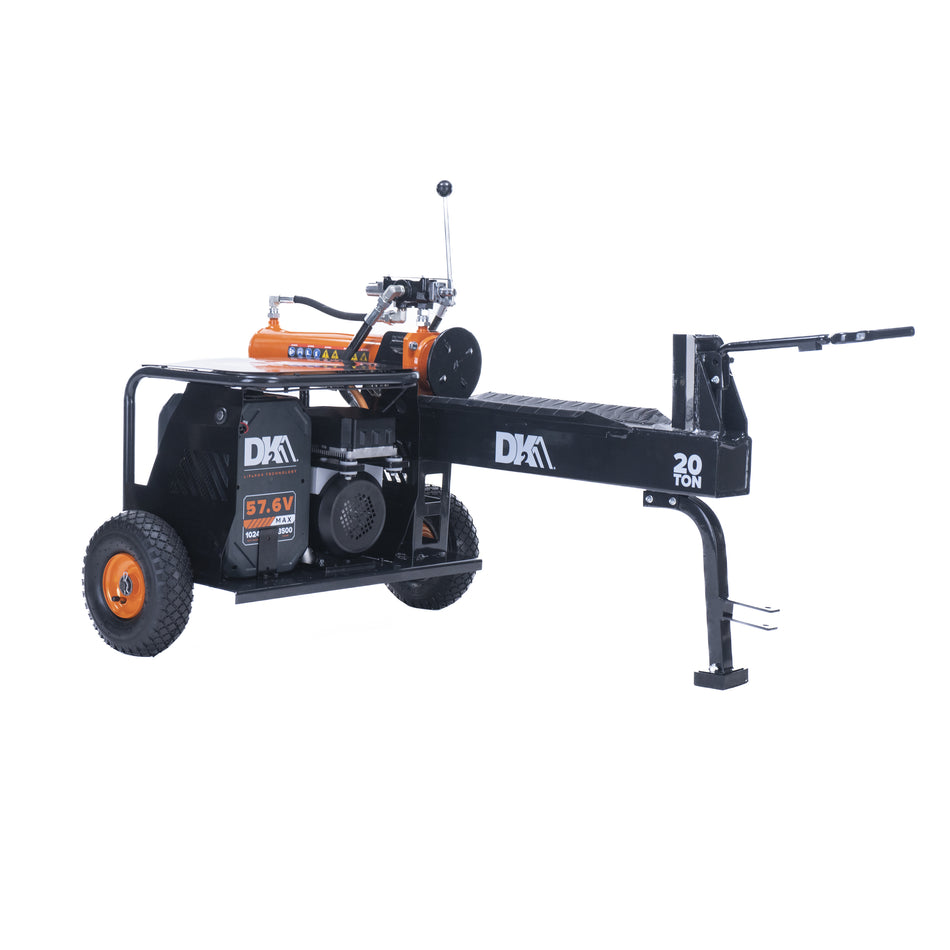
 -18%
-18%


